 3 months ago
79
3 months ago
79

Eddie Glaude Jr. speaks in Philadelphia on March 1, 2023. Lisa Lake/Getty Images hide caption
toggle caption
Lisa Lake/Getty Images
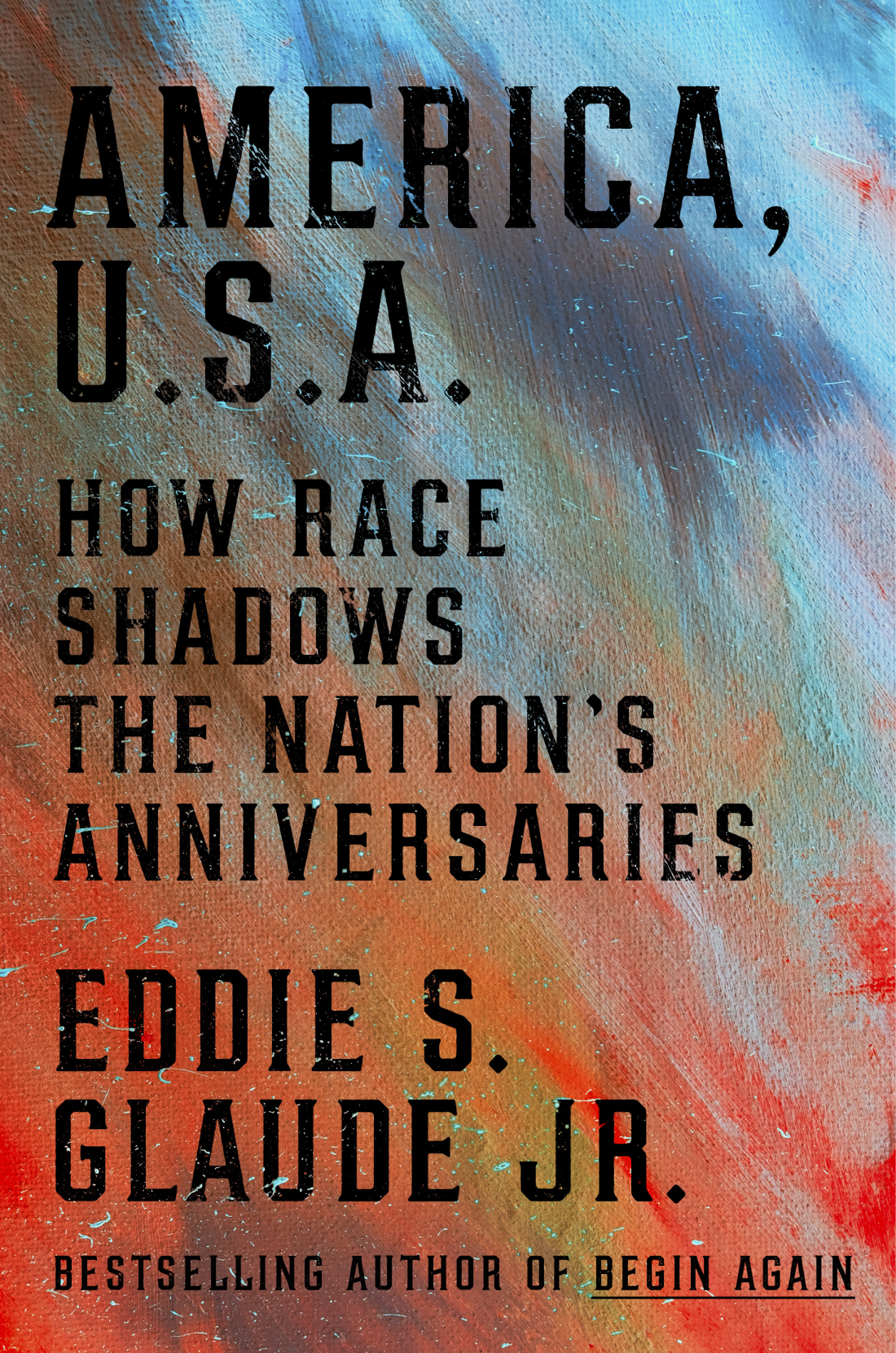
As the United States prepares to celebrate its 250th anniversary, historian and Princeton professor Eddie Glaude Jr. says he's feeling rageful. He opens his new book, America, U.S.A.: How Race Shadows the Nation's Anniversaries, bluntly, with the declaration: "I do not love America, and never have, especially now."
Glaude points to the Supreme Court's dismantling of the Voting Rights Act, and to redistricting efforts that threaten to limit Black representation in Congress.
"What I was trying to do with this book was kind of write some security underneath my feet. So that I could actually get this rage under control, to get my sadness, my melancholy under control," Glaude says.

America, U.S.A. looks at the country through the lens of its previous anniversaries and centennials. Today, as in the past, Glaude says, "the divided soul of the nation is in full view." As the 250th anniversary approaches, he says it's past time for the country to acknowledge the ways it has failed to deliver on its founding principles:
"America has to grow up. It can no longer hide in its adolescence," he says. "America imagines itself at once as a beacon of freedom and as a white republic. And to hold those two things together ... deposits the kind of madness at the heart of the country."
Interview highlights
On starting his book with the sentence: "I do not love America"
I had written some version of the introduction and it didn't land. I thought I was holding something back. … And so I returned to that first paragraph, and suddenly this sentence just came on the page. And I got up and I started walking around my study and I was afraid of what this would mean if I left it there. And then something inside of my head just simply said, "But this is what you have to say. You have to begin here and then you can explain." So I left it.
On the significance of the country's anniversaries

Each of these moments, the country has to tell a story about itself. It has to tell a story about its founding. And so here we are in the 250th and look at the kinds of the contours of the story — just don't look at the UFC arena or the Great American Fair or the garden of statues of heroes. But they're going to tell a story [about] the saintliness of the founders, a story about the sacredness of this grand experiment.
On what patriotism means to him
Sometimes patriotism, to my ear, sounds like a rebel yell. Those people who embrace the flag, who wrap themselves up in the piety of the country, are often, more than not, folk who think I should be in my place, folk who are behind the assault on voting rights, folk who want to deny the specificity of the experiences that shape how I see this place. So usually when I hear a robust, visceral embrace of love of country, you know, my head goes on a swivel. Who sang it, and for what ends and for what purposes?
On a storybook version of America's founding he was told during a 2024 tour of Philadelphia's Congress Hall

[The guide was] walking us through the House and then the Senate, and he's telling us these stories and finally talks about the conflict. [He says] that they weren't divided according to party but, you know, region and whatnot. And [he] said the biggest conflict is that they came from the South and the North. And I was like, OK, here we go. We're going to start talking about slavery. And then he says they didn't know how to shake hands. That was the example of the conflict between the congresspersons, that one would bow [and the other would shake]. And I was like, that's it? And then I just saw ghosts. I saw ghosts all around Congress Hall. But it was an example for me of a startling example of the storybook version of the country.
Anna Bauman and Susan Nyakundi produced and edited this interview for broadcast. Bridget Bentz and Meghan Sullivan adapted it for the web.