 10 hours ago
4
10 hours ago
4
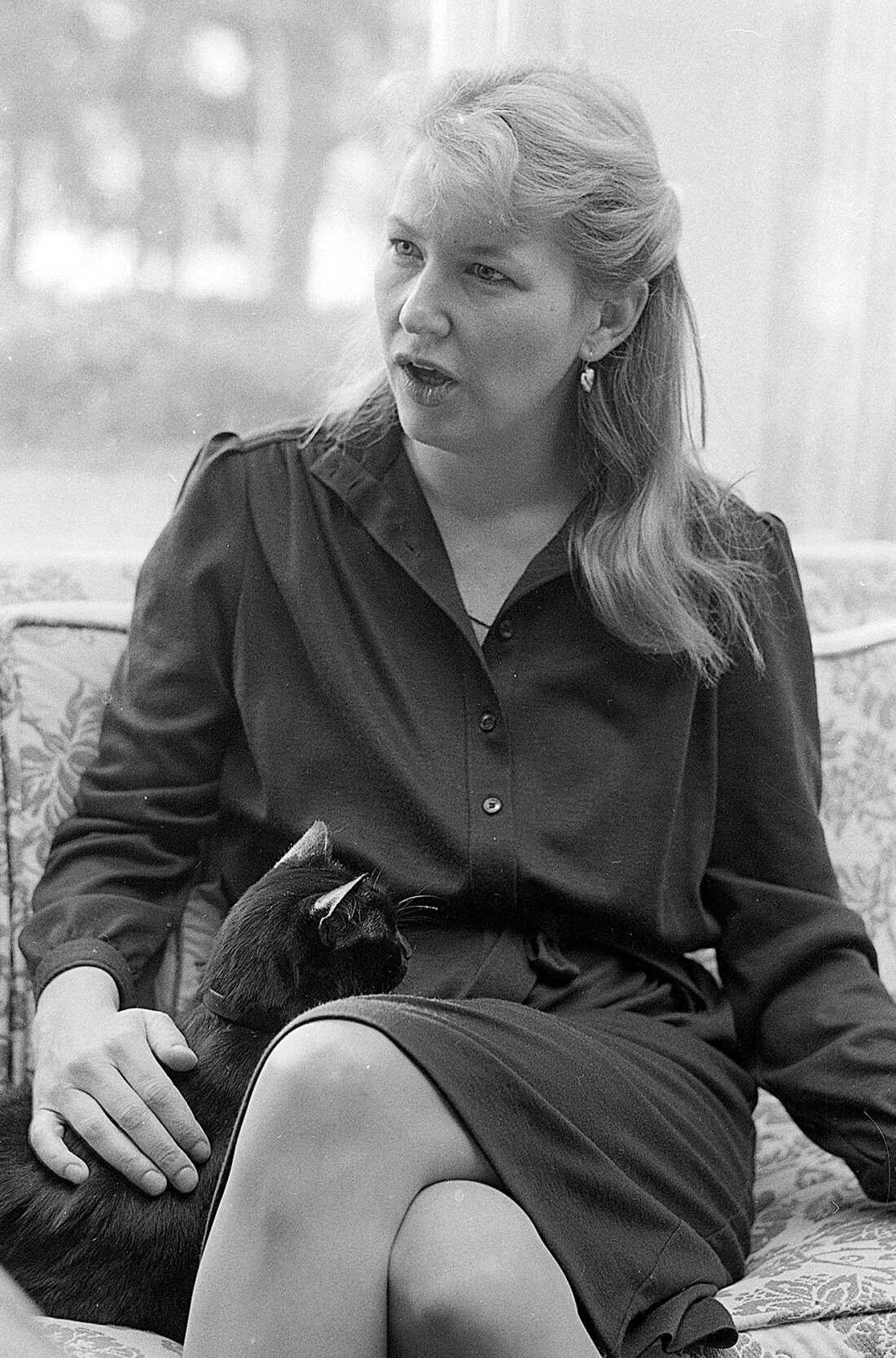
Writer Annie Dillard talks about her book "Teaching A Stone To Talk," during an interview at her home in Middletown, Conn. Jan. 24, 1983. BOB CHILD/AP/AP hide caption
toggle caption
BOB CHILD/AP/AP
Annie Dillard, who died this week at the age of 81, was often called a nature writer. And she wrote about weasels, squirrels, muskrats and snails, cedar trees and sycamores, mourning doves, moths, and, notably, a giant water bug that bites a small frog and…well, no need to go into that now.
But it was the nature - the mystery - of life that engaged her.
Annie Dillard became the youngest woman ever to win the Pulitzer Prize for General Nonfiction, at the age of 28, for her book, Pilgrim at Tinker Creek. She began the book remembering her old tomcat, who would jump through the bedroom window after prowling outside her home in rural Virginia.
"And some mornings," she wrote, "I'd wake in daylight to find my body covered with paw prints in blood; I looked as though I'd been painted with roses.
"The sign on my body could have been an emblem or a stain, the keys to the kingdom or the mark of Cain. I never knew," Annie Dillard continued. "…We wake, if we ever wake at all, to mystery, rumors of death, beauty, violence... 'Seem like we're just set down here,' a woman said to me recently, 'and don't nobody know why.'"
There was a kind of biblical drama and cadence to Annie Dillard's blunt and beautiful words. She described herself as "spiritually promiscuous," finding insights from across all religious feelings.
Annie Dillard asked in her 1989 collection of essays, The Writing Life, "What do we ever know that is higher than that power which, from time to time, seizes our lives, and reveals us startlingly to ourselves as creatures set down here bewildered?"
By the time she left us this week, Annie Dillard still seemed lovingly bewildered by the beauties and hazards that abound on earth. But she looked for meaning with her words, and her writing opened understanding to others.
"One of the things I know about writing is this," she said—she wrote—"Do not hoard what seems good for a later place in the book or for another book; give it, give it all, give it now."
And she wrote in Pilgrim at Tinker Creek these words about life that we might take with us today; and I mean right now, this morning.
"Spend the afternoon," wrote Annie Dillard. "You can't take it with you."