 2 months ago
64
2 months ago
64
TONYA MOSLEY, HOST:
This is FRESH AIR. I'm Tonya Moseley. Two days ago, Ghislaine Maxwell, Jeffrey Epstein's longtime associate and the woman convicted of helping him recruit, sexually abuse and traffic teenage girls, appeared on a screen from a federal prison camp in Texas before the House Oversight Committee. She said nothing at the closed-door session, invoking the Fifth Amendment. But through her attorney, she made an offer - give me clemency, and I'll talk. Maxwell isn't the only witness being called before the committee. In the coming weeks, they plan to hear from Les Wexner - the billionaire who gave Epstein control of his fortune, former President Bill Clinton, former Secretary of State Hillary Clinton, as well as Epstein's accountant and his lawyer.
And for the first time, members of Congress have access to a secure room at the Department of Justice to read the unredacted Epstein files. Those documents, totaling more than 3 million pages, are the largest release of Epstein related files to date. They include private emails, a draft indictment that was never filed, an FBI diagram mapping his network, photographs and the unredacted names of victims, including minors. And yet, the Justice Department says it's review is complete. No further prosecutions are expected.
My guest today is investigative journalist and author Vicky Ward. She was one of the first reporters to investigate Jeffrey Epstein's world in 2003 for Vanity Fair. She later said the most disturbing allegations she uncovered were never published because they were cut by her editor. In those newly released government files, Ward also found a document of Epstein trying to discredit her, confirming what she's been saying for 23 years. Our interview was recorded yesterday.
And Vicky Ward, welcome to FRESH AIR.
VICKY WARD: Thank you so much for having me.
MOSLEY: Well, thank you for being here. And I want to actually start with what happened on Monday. So Ghislaine Maxwell, as expected, invoked the Fifth Amendment, but her attorney made, I think, what would be called a striking play. He said that Maxwell would testify in public if granite clemency by President Trump, and he went even further saying that both the president and former President Bill Clinton are, in his words, innocent of any wrongdoing. You've actually studied how she thinks, so I would love to know what you make of this offer.
WARD: Well, I wasn't surprised. I mean, Ghislaine Maxwell, at this point, has absolutely nothing to lose. And she's probably heard that last week, President Trump said it was a shame in his opinion that the Clintons were being hauled in front of Congress. Now, possibly that's because, you know, a precedent is being set here, and, you know, Congress may well haul President Trump in front of it, you know, once he's left office. If they can do this to the Clintons, they can do this to him. I think that the evidence shows that whatever Ghislaine Maxwell says, unfortunately, is meaningless. And I say that because I read the transcripts of her interview with Todd Blanche in the summer very carefully, and they were packed with untruths. I sat through her criminal trial in which she was convicted, and let's not forget one of the counts was for perjury. I think that the survivors have said that they feel that were she to be given any credibility at this point, that would be a real slap in the face to them. The tragedy of all this is that if Ghislaine Maxwell were to be able to step outside of herself, as it were, if she were to be able to tell the truth, she knows everything. And that's the tragedy here.
MOSLEY: And you mentioned Todd Blanche. He is the deputy attorney general who interviewed Maxwell last summer after which she was moved to a more comfortable prison. I want to unpack a little bit of what you're saying about the untruths that she gave over the summer because you have been following this for so long. Maxwell actually inserted herself in your reporting early on when you were working on that Vanity Fair story about Epstein, is that right?
WARD: Yes.
MOSLEY: Describe who she is, because, I mean, she's kind of like a social gatekeeper. She was his recruiter. She trafficked girls as young as 14.
WARD: So Ghislaine Maxwell is actually the key to the entire Epstein scheme. There's no evidence that he abused underage girls or trafficked them before he met Ghislaine Maxwell. So her importance is critical on two different levels. Regarding the vulnerable teenagers and young women who were recruited by her, she played a critical role because they looked up to her, and they saw her as this very sophisticated woman, well educated. She'd been to Oxford University. Her father had been a very powerful man.
MOSLEY: Can you very briefly talk about who her father was?
WARD: Yes. So her father, Robert Maxwell, had been a global newspaper proprietor, global publisher and a politician. He was somebody who wielded enormous influence around the world because of his newspapers, and it would emerge after his death, you know, he was also, you know, a sort of international spy. He spied for the Russians. He spied for the Israelis. He spied for the British. And he was a massive figure of international influence. He had a Rolodex of hugely powerful and important people all around the world from all walks of life. I mean, he was also, by the way, a terrifying man, a horrible person. And a bully.
So Ghislaine Maxwell grew up in great privilege, and she knew many, many, many powerful people around the world because of her father. But her father died in 1991 in very strange circumstances. He had been on his yacht, which was named after Ghislaine. It was called Lady Ghislaine. And he was found in the water. And it emerged very quickly after his death that he had, in fact, stolen a huge amount of money from the pension funds of his employees at the Mirror Group Newspapers, which was the holding company of his newspaper company in England. And his two sons, two of Ghislaine's brothers, Kevin, and Ian, were put on trial. I mean, they ultimately were acquitted. But it's at this point of Ghislaine's life that she, one, moves to New York, and, two, it's around this time shortly before her father dies that she meets Jeffrey Epstein. And so when she meets Jeffrey Epstein, she's vulnerable financially for the first time in her life.
MOSLEY: For people who didn't follow the trial closely, remind us of her importance in understanding the scope and scale of Epstein's wrongdoing.
WARD: Yeah. So Maxwell was key because she was this wealthy, sophisticated woman, and she would go out. You have to remember, Jeffrey Epstein didn't really go out, which is one of the reasons he was such a mystery and why I was asked to report on him in the first place. The person who was out and about in New York and all over the world was Ghislaine Maxwell. And now we know what she was doing. She was looking for young models, young girls and trawling the sort of social scene in New York. So she would find these young girls often - women, children, who looked up to her greatly because she was so sophisticated and knew so many rich and important people. And so then she would bring them in, and you heard this again and again at her trial. She would bring these young girls. She would introduce them to Jeffrey Epstein. She would playfully suggest they all massage Jeffrey Epstein's feet. She would then get undressed whilst giving Jeffrey Epstein a massage. She would normalize this sexual behavior in front of them. And so because of her, they trusted what was going on and then took part in it.
And so I think her role was absolutely critical in the recruiting and grooming of these young girls. And she was also critical in expanding Jeffrey Epstein's Rolodex amongst the powerful people around the world. And the two things are related because until Jeffrey Epstein had this huge amount of money and the protection of all these powerful people that he knew, there's no evidence that he ever abused an underage girl.
MOSLEY: Let's take a short break. If you're just joining us, we're talking with investigative journalist and author Vicky Ward about the renewed scrutiny of the Jeffrey Epstein case, including Ghislaine Maxwell's appearance before Congress and the Justice Department's release of a massive trove of Epstein-related materials. We'll continue our conversation after a short break. This is FRESH AIR.
(SOUNDBITE OF WILLIE NILE SONG, "I'M ON FIRE")
MOSLEY: This is FRESH AIR, and today I am talking with journalist and author Vicky Ward. She's been reporting on Jeffrey Epstein for more than two decades, from her early investigation in 2003 to her more recent work examining how Epstein's network of wealth and influence operated and why so many questions about accountability still remain unanswered. Our interview was recorded yesterday.
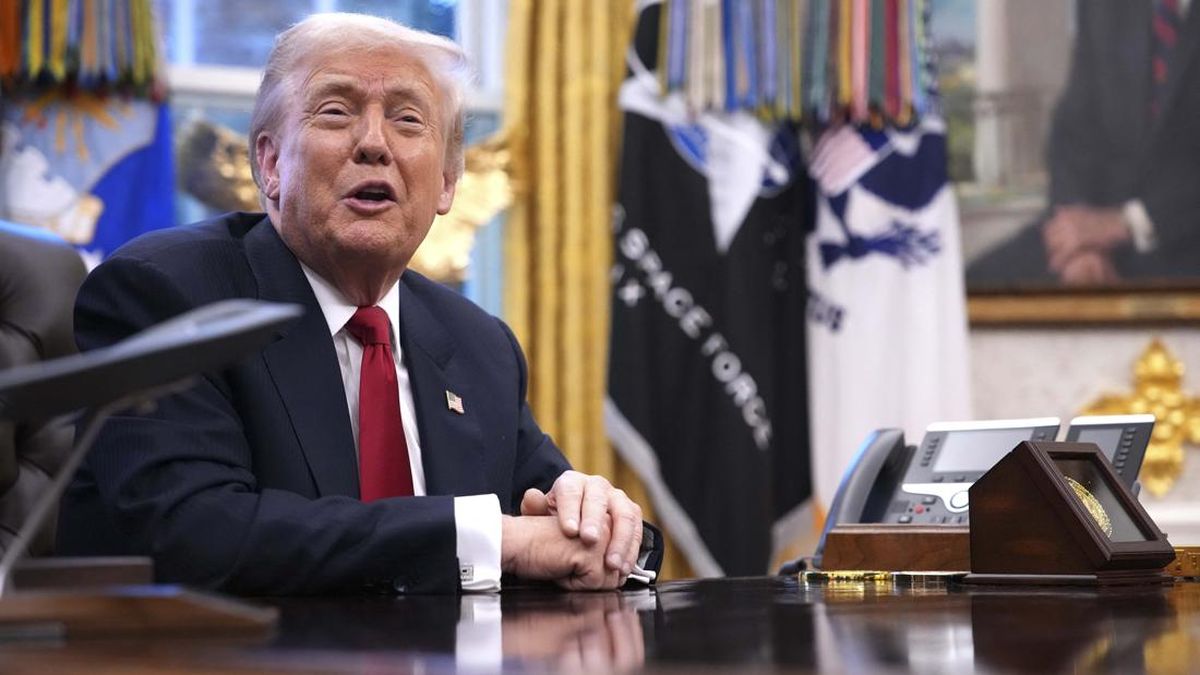
Let's get into the millions of files the Justice Department released. Over 3 million pages, 2,000 videos, 180,000 images, and they are not in chronological order. President Trump's name appears thousands of times in these files. The New York Times counted more than 38,000 mentions across 5,000 documents. What do you actually know about the Trump-Epstein relationship? What your reporting has shown you over the years.
WARD: Well, it's an interesting one. I mean, we know that they hung out together. I mean, we've got, you know, photos of them. And none of the survivors I've ever spoken to have ever suggested that Donald Trump abused them. They haven't. So I just want to be very clear about that.
I have, in the course of my reporting, talked to Sam Nunberg, who was Trump's first-ever actual political campaign operative back in 2015, which is when Virginia Giuffre really came forward sort of more strongly. She'd originally surfaced in 2011, but Virginia Roberts - Virginia Giuffre was her married name - in 2015, came out and said that she had been Epstein's sex slave and she'd been pimped to all these high-profile names. And Sam Nunberg told me that he was working for Trump, who was obviously running for the presidency for the first time, and asked him about Epstein because I think he knew that the two men had been friends. And Trump was actually very dismissive, according to Nunberg, back then of Epstein and said, oh, I chucked him out of Mar-a-Lago. And that turns out to be true.
But we do know that Jeffrey Epstein, you know, once Trump became president, was clearly obsessed with the fact that Trump had become president. And it seems clear from the emails that Jeffrey Epstein believed that the information he had on Trump could be invaluable if he wanted to bring Trump down.
MOSLEY: So in addition to Maxwell, who pled the Fifth earlier this week, the committee has five more depositions on the books. There's Les Wexner, the billionaire behind Victoria's Secret, and then there is Hillary Clinton. There is Bill Clinton and Epstein's accountant and lawyer. But of all of those names that I just listed, who do you think has the most to answer for, and maybe who's missing from that list?
WARD: Well, who's missing from the list is Leon Black.
MOSLEY: Describe who Leon Black is.
WARD: So Leon Black is one of the wealthiest men in this country and, until recently, was the founder and chairman of Apollo, which is a massive private equity firm. And it emerged a few years ago that Leon Black had paid Jeffrey Epstein over $160 million for what he said was tax advice. And, you know, given that Jeffrey Epstein was not an accountant and, in fact, hadn't even graduated college, I think a lot of people still have real questions about that.
MOSLEY: Vicky, you've been talking about some of those first victims of Epstein who came forward. And there is a serious problem with this file dump, as we have been reporting over the last really week or so, because at least 43 full names of victims were left unredacted, including minors, some appearing over a hundred times while names of these alleged enablers and people in powerful roles were blacked out. And the DOJ says that it's a technical or human error, but the harm is still done.
I want to play a clip from a voice you know well. It's Annie Farmer. As you mentioned, she was 16 when she says she was sexually assaulted by Epstein and Maxwell. She was one of the witnesses whose testimony helped convict Maxwell, and she and her sister, Maria, were the first people to go on the record with you in 2002. And she spoke with NPR's All Things Considered recently. And here's what she said about the files. Let's listen.
(SOUNDBITE OF ARCHIVED NPR CONTENT)
ANNIE FARMER: I think that it is really disturbing to know that, for example, you can see, Virginia Roberts Giuffre was providing detailed information about the scopes of these crimes in 2011. You know, there's depositions that include names of other individuals that she reported. So when they say, you know, the information's not there to pursue charges, I just - I would say, you know, what did you do with this information? Where's the evidence of the investigation that shows charges are not warranted? That, I think, is - it's not clear. It's very hard, you know, with so many files and them being so disorganized to see the trail of, you know, what was done to follow up on things. But so far, I think we have a lot more questions about why.
MOSLEY: We just heard Annie Farmer on All Things Considered raising questions that I think gets at the heart of this. We heard her mention Virginia Giuffre, who was a victim who died by suicide just last year in April of 2025. What Annie is asking is not just what's in the files, but what's not there - the trail of what was done with that information, 19 girls, some as young as 14. What did these files tell you about where the investigation stopped? And why? What is the most egregious point that you have with it, you know, when you look at the fact that the Justice Department says there likely won't be charges filed from this.
WARD: Well, I think that's a ridiculous thing to say, given the carelessness with which they've handled this entire rollout. I mean, the fact that they didn't take enough care and effort to make sure that those victims' details were redacted, you know, to me, undermines any notion that they can say with any clear conviction that there should be no further prosecution. I mean, none of us have been able to go through all these files. I mean, it's physically impossible at this point.
MOSLEY: It's going to take a while. Right. Right.
WARD: But what I have seen, for example, already in there - there's clearly -there's emails between Alex Acosta, the U.S. attorney in Miami who did that cushy plea deal with Epstein and lawyers who represented Epstein, Jay Lefkowitz.
MOSLEY: And I just want to set the scene for folks who don't know or understand. In 2007, U.S. attorney Alex Acosta offered Epstein a deal - plea to state prostitution charges, serve 18 months in a county jail. He served 13 with work release six days a week, and he had to register as a sex offender. I just wanted to lay that out for people on what you're talking about.
WARD: Yes. And so what many of the victims have wanted to understand, because what was so egregious - the feds, the FBI, had worked very, very hard at this point and knew - they - the feds knew of the scale of Epstein's abuse. They understood that. And so the idea that suddenly the state could come in and he could do a deal where he pled guilty to these two state charges. One was prostitution, and the other was soliciting a minor. And so basically nothing compared to what the feds knew was going on, that he could make this deal, plead guilty to these two charges, get a very short jail sentence, which turned out to be ridiculously cushy, and he was allowed to have work release on it. And this deal was done behind the victims' backs - they weren't even notified about it - was totally shocking. And on top of it, Epstein got this non-prosecution agreement signed, which meant that four individuals who worked very closely with him, the government agreed not to prosecute them.
And they had been sort of, you know, women closely around him, some of them who'd gone out and recruited other girls. So, you know, understandably, the victims were outraged and wondered, how could this have happened? A lot traces back to that deal. I mean, it's a travesty that the federal investigation was stopped in its tracks and then buried and then left. I mean, it's an absolute travesty.
MOSLEY: Our guest today is journalist Vicky Ward, one of the first reporters to investigate Jeffrey Epstein. We'll continue our conversation after a short break. I'm Tonya Mosley, and this is FRESH AIR.
(SOUNDBITE OF MUSIC)
MOSLEY: This is FRESH AIR. I'm Tonya Mosley, and my guest today is journalist Vicky Ward. She's an author, investigative reporter, a former CNN senior reporter and, for more than a decade, she was a contributing editor at Vanity Fair. Ward was one of the first journalists to seriously dig into Jeffrey Epstein's world in 2003, and she later said that some of the most troubling allegations she uncovered never made it to print. Ward is also the host and co-producer of the investigative series "Chasing Ghislaine" about Epstein's associate Ghislaine Maxwell, and she writes the Substack newsletter "Vicky Ward Investigates." Our interview was recorded yesterday.
I want to go back to where your part of this story begins. We're in 2002 now. You're a contributing editor at Vanity Fair, assigned to profile Jeffrey Epstein. You were pregnant at the time with twins, and then these two sisters, Annie and Maria Farmer, came to you with on-the-record allegations of sexual abuse. You corroborated their accounts. You put them in the piece, and then Epstein came to put a stop to it. Remind us how he did that and how that part of your reporting was removed from the story.
WARD: Yeah. I deliberately kept the Farmers' allegations away from him until the eleventh hour, which is, you know, a strategy that most reporters do because, you know, when they're profiling somebody, they need to continue to talk and talk and talk. They know that if they've got sort of something that's dynamite, once they put that allegation to the person, that's the end of the conversation, so you'd better have everything else buttoned up before you put that allegation. So it was the last one that I put to him and I put to Ghislaine Maxwell because Annie Farmer, in particular, had allegations about Maxwell and about the topless massage Ghislaine Maxwell had given her that made Annie Farmer terrified and uncomfortable. And they went absolutely berserk and...
MOSLEY: Maxwell and Epstein.
WARD: Both of them. You know, and Epstein then sent me - you know, faxed me over all this documentation that he claimed disproved what the Farmers said. It didn't disprove what the Farmers literally said. It said, oh, here's an - a postcard from Annie Farmer thanking me for sending her to Thailand. OK. That doesn't prove anything. And I was, at this point - you know, my doctor was getting very concerned. I mean, this piece had become a sort of endless nightmare, actually. And he was concerned for me, so I was sort of put on bed rest at home and - in that period. But I was pretty certain that the piece was just going through the last stages of fact-checking.
And then, lo and behold, Jeffrey Epstein appeared in the office of the - my editor, Graydon Carter, in Vanity Fair. And that was just totally shocking. I got an email from a fact-checker telling me, oh my God. Epstein's here. And then the final galley - that was the one that was going to be published to the printers - suddenly didn't have them. And I was told it was because it was a financial piece. It read better as a purely financial piece. And I was just - I remember like it was yesterday. I burst into tears. And I did say to the guy who was editing the text of the piece, we can't do that. We have just exposed these sisters. Epstein and Maxwell now know. It was appalling. The problem was that I then went into labor and...
MOSLEY: You had a child, yet you're taking (ph)...
WARD: Well, I went much too soon - much, much too soon, at 30 weeks, before the piece had even hit newsstands. And so my babies fought for their lives. I mean, they were 2 pounds and 3 pounds. And, well, we were just terrified he was going to harm them. And, I mean, it - that sounds ridiculous, but we didn't know what he was capable of. And I think that's why my husband and I then sort of made a pact that we were just going to try and forget all about Jeffrey Epstein. And we were going to try and just care for our children, and we were going to just march forward and forget the whole thing. And, you know, Ghislaine Maxwell occasionally would pop up around. And I, you know, smiled and tried to just sort of almost - I tried to normalize it.
MOSLEY: Right. She popped up around in social situations. You would see her.
WARD: And then it was only really in 2015 when Virginia - she joined the class action suit that Brad Edwards was spearheading of all the victims who were fighting.
MOSLEY: And remind us who Brad Edwards...
WARD: So Brad Edwards was this Florida lawyer who really is a hero in this story and who sort of gathered up many of the victims in Florida and said, right. We're going to fight the fact that this plea deal was done and done behind your back. It is a breach of your rights. And he fought it. And he, along with David Boies - you know, they found Virginia in Australia, and they persuaded her in 2015 to join this class action suit. And so it was when that class action suit was filed - and it had names of all the people around Jeffrey Epstein in it, and so finally the media woke up.
And one day, I found - I was going up in the elevator to my apartment in New York, and inside my hallway, there was a reporter, I think, for The Sun, waiting for me. And I realized that there might be new - a new lease of life in this story, and that's when I phoned the Farmer sisters. We hadn't been in touch for all those years, and I had left Vanity Fair by then. And I said, what do you think? Do you think we try again now? Do you think we say what happened? And they said, yeah. Let's go for it. And so that's why we changed tack, and that's why I wrote a piece in 2015 saying the sisters had been cut from Vanity Fair.
MOSLEY: If you're just joining us, we're talking with investigative journalist and author Vicky Ward about the renewed scrutiny of the Jeffrey Epstein case. We'll continue our conversation after a short break. This is FRESH AIR.
(SOUNDBITE OF JOAN JEANRENAUD'S "AXIS")
MOSLEY: This is FRESH AIR. Today, I'm talking with journalist Vicky Ward. She's been reporting on Jeffrey Epstein for more than two decades, from her early investigation in 2003 to her more recent work examining how Epstein's network of wealth and influence operated and why so many questions about accountability still remain unanswered. Our interview was recorded yesterday.
There is something revealing in these documents, too, not just in those tactics, 'cause they weren't overt threats. They're more so like intimate notes to them about the things that he knows about them, just to remind them that perhaps someone can read - that there's other information that he knows that could get out. Like, I am your friend. I know what we've done together. I mean, Bill Gates' relationship with Epstein is well documented. I mean, there's also the meetings at Epstein's town house and the flights, and all of this stuff happened after the 2008 conviction of Epstein for sex crimes, and Gates has never fully explained why he continued that relationship. Did you notice anything new, though, that adds to what we know about Gates and Epstein?
WARD: I mean, obviously, that - the draft of that email about Bill Gates was extraordinary. And Melinda Gates coming out and saying that triggered very painful memories. I mean, I think Melinda Gates, unlike her ex-husband, clearly had better judgment of people. And, you know, for all the people who say, oh, well, I went to see Jeffrey Epstein, I didn't see the girls, there are also people I've spoken to who did walk into his house once, took one look around and looked at all these young women and did immediately leave. And I think that what you see is that people like Melinda Gates clearly got that same vibe.
You know, what Bill Gates wanted from Jeffrey Epstein is something that does make sense. You know, Epstein had a Rolodex of other billionaires around the world, and Bill Gates wanted to scale up his philanthropy, and so did Warren Buffett. And Epstein told him that he could put together a fund using JPMorgan, and he could bring all these other people in his Rolodex together. And that was very appealing.
MOSLEY: It still is - for many people, it still doesn't make sense. This is Bill Gates. He has access to above-board financial advisers - one would assume the best in the world.
WARD: Well, again, but this is what's so interesting and what Epstein understood, which is so clever, that the global elite, I mean, the real elite - the 0.001% of the world - they have gatekeepers, but once you're through the gate, you're in, and they stop asking questions that they probably otherwise should. And let us not forget that when Bill Gates met Jeffrey Epstein, Larry Summers, the former president of Harvard, was in the room. So was Jes Staley, the No. 2 banker at JPMorgan. And remember all the scientists who Epstein cultivated, you know, following, by the way, a business model that Ghislaine Maxwell's father had done, you know, to give - it gives him a veneer of respectability.
MOSLEY: And credibility.
WARD: And I think it makes people like Bill Gates stop - and Larry Summers and Jes Staley - they stop using their judgment because it looks like this is going to work out very well for them. I mean, it's all about transactionality.
MOSLEY: I want to ask you about a few other people. So these emails in the files show Elon Musk corresponding with Epstein as late as 2014, asking about his parties, writing about how he wanted to let loose. I think the quote is, "a peaceful island experience is the opposite of what I'm looking for." This is contradictory to Musk's public statements about their correspondence...
WARD: Right.
MOSLEY: ...Which, for me, it just begs this larger question. What do those emails actually show us about how Epstein cultivated people at that level, not just in the financial sphere with someone like Gates but just in the social sphere.
WARD: Well, I'm sure he was courting Elon Musk, not just socially. I mean, you get him to your island, you get him in for a meeting, and then you make your pitch. I mean, I think, you know, we do see that Epstein was definitely trying to wheel and deal in Silicon Valley just as much as he was trying to, you know, trade currencies, using inside information that - given from people like Peter Mandelson in the British government at the time, possibly former Prince Andrew. It's hard to separate, I think, the financial from the social. It's all part of the same thing.
And these guys are all looking for the edge they think Epstein can give them because of this extraordinary Rolodex that he has, and he's almost like a single international intelligence agency all by himself. When you look at these emails, I mean, he knows which head of government is landing in which country in two weeks' time. He's got tentacles into the Kremlin. And if you look now at the range of people who had to step down or have been severely embarrassed by this release, it's global.
MOSLEY: I mean, this is where the conspiracy theories take root because there are - inside of these files, like, an FBI source reports this unverified claim about possible intelligence ties. What is actually substantiated versus what is speculation on that front?
WARD: There's nothing that I've read that suggests Jeffrey Epstein is working for anybody else other than himself. But what he is able to do, what you do see is him using his global network to his advantage. You see him telling the lead banker at JPMorgan where Andrew Mountbatten-Windsor is going to be, you know, because obviously, JPMorgan want Andrew Mountbatten-Windsor as a client. You see him finagling his way to try and set up a meeting with Putin. Ehud Barak, the former prime minister of Israel, is in his house so often that in one of the emails, one of the Israelis refers to it as - Epstein's house as Barak's house. I mean, it's really extraordinary. Bill Burns, the former head of the CIA, I mean, he's going back-and-forth with Epstein. We haven't even talked about the fact that our commerce secretary, Howard Lutnick, you know, again, who said in an interview he turned on his heels and smelt something wrong around Epstein and never seen him again - well, that turns out not to be true. Lutnick has rather more to lose because he is in the government.
MOSLEY: You know, there is a question that I kind of feel is at the center of all of this. It's never fully been answered. I don't know if it could be, but there are some clues there, but who Jeffrey Epstein was really. I mean, we know the basic stuff. We know that he was a college dropout. He taught at this fancy school, the Dalton School. He worked at Bear Stearns. He claimed to manage money only for billionaires with a minimum investment of $1 billion. His estate was valued at close to 600 million at his death. We've talked about his major client being Les Wexner. That seems to be where the foundation of his wealth came from. But what is your best understanding of where his money truly came from?
WARD: Well, you know, I noticed that in the file where the FBI interview Wexner, Wexner says he believes that the foundation of Epstein's wealth was from him. And then we know that in the subsequent years, it came from Leon Black. When Epstein was investing Wexner's money in the markets, we know that aside from the - all the real estate deals, he was farming it out. It wasn't, by the way, that Epstein was doing anything brilliant. He just farmed the money out to various hedge funds. In the '90s, it would have been impossible not to make money. I mean, the market was roaring. And so that's how he was able to get returns, not just for Wexner but, as we know, siphoning them off for himself at the same time.
But there was a lot of other stuff going on that I have reported - murky stuff. Wexner wasn't the only rich person on his radar. See, what he claimed to a lot of people was that he would say, give me power of attorney over your money. Because then basically, the implication was what he was going to do was something that might not be completely legal. He was going to put money offshore to help avoid taxes. But the problem is, once you do that, the money's gone. It is offshore. And he's essentially in control. I mean, I report in a podcast series that I made, I mean, this is what he learnt how to do in the 1980s. He recovered stolen money for a Spanish family. They'd been defrauded. And he told me in person, by the way, in 2002. He said to me, when...
MOSLEY: Jeffrey Epstein.
WARD: Yes. When rich people lose their money or they're defrauded, they don't go to the authorities. He understood that about wealthy people. They're embarrassed. And so he found a little niche job opportunity. He would find the money, but then he would give himself power of attorney, lock it up in a Swiss bank. And then it would emerge - I discovered this when I made a podcast series called "Chasing Ghislaine" - they never got the money back. He kept control of it.
MOSLEY: And then they wouldn't go to authorities about it, and so he was able to get away with it.
WARD: Well, they were stuck. Yes.
MOSLEY: Let's take a short break. If you're just joining us, we're talking with journalist Vicky Ward about the latest developments in the Jeffrey Epstein case, as well as her longtime reporting. We'll be back after a break. This is FRESH AIR.
(SOUNDBITE OF THE OCTOPUS PROJECT'S "THE ADJUSTOR")
MOSLEY: This is FRESH AIR. And today, I'm talking with journalist Vicky Ward, author, investigative reporter and host of the documentary series "Chasing Ghislaine" about the disclosures in the Jeffrey Epstein case and what it tells us about power, accountability and why this story still feels unfinished. Our interview was recorded yesterday.
You know, something that my producers and I have been talking about is how there seems to be kind of two different ways the world is responding to the Epstein files. In the U.K., we have seen, since these files began to surface, a prince has been stripped of his titles and evicted. Peter Mandelson has been fired as ambassador, forced out of the House of Lords and is under criminal investigation. The prime minister is fighting for survival. There are investigations in Norway, Lithuania, Turkey, and they seem to have real consequences. And then here, where these files originated, the deputy attorney general says the review is just about complete, and there are - no further prosecutions are expected. And you are British born. I am curious about how you explain that gap in how this case is handled here versus in the U.K.
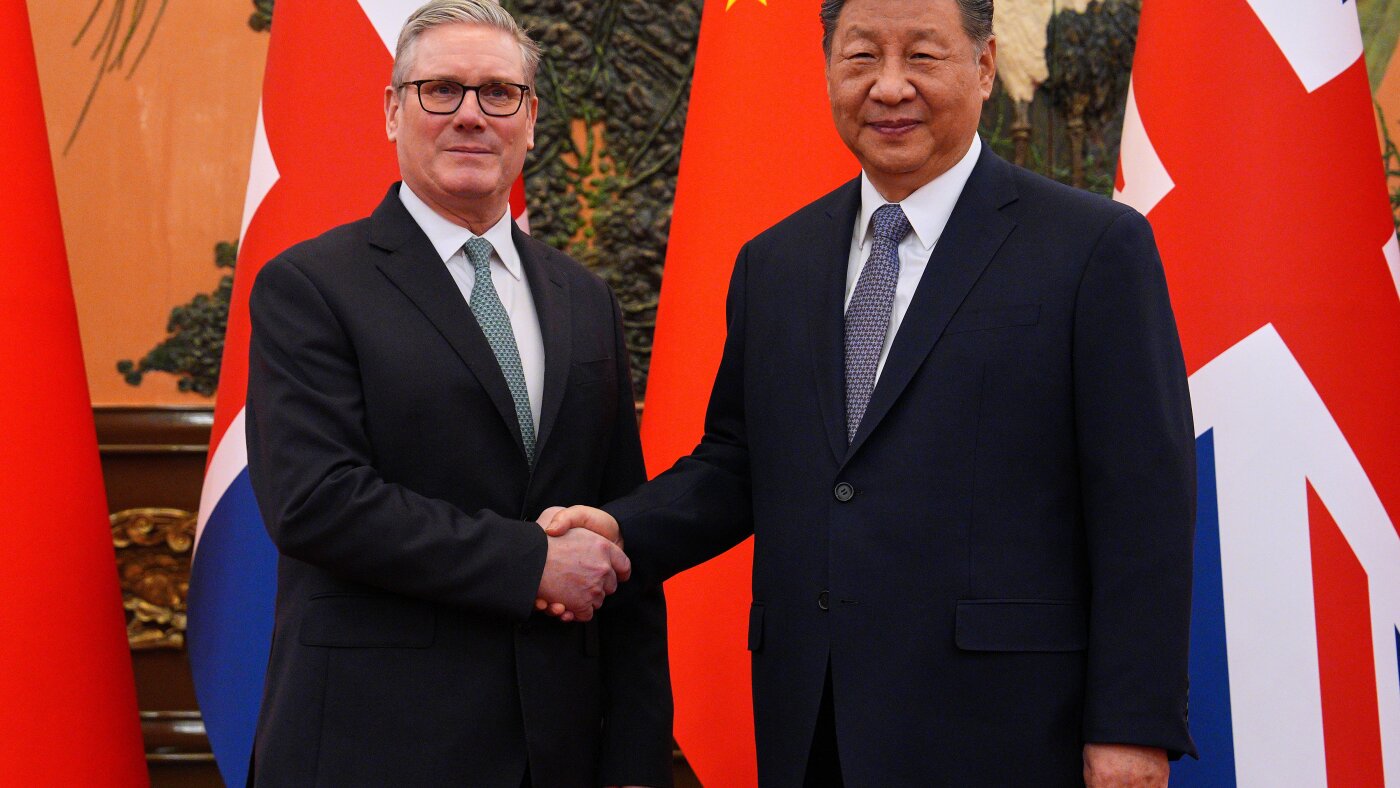
WARD: Well, you know, good for the Brits for having a legitimate culture of shame and accountability. My personal view is, I think that if Keir Starmer, the prime minister, falls over this, that would be a shame because he had no knowledge of any of this when he was advised to make Peter Mandelson ambassador to the United States. I mean, I - he knew that they had known each other, but Keir Starmer had never met Jeffrey Epstein, and he had absolutely no knowledge of this idea that Mandelson - I gather Epstein made payments to Mandelson's husband, as well as this idea that Mandelson betrayed British government and handed Epstein market-sensitive information.
I think maybe, like everything in this story when it comes to America, it's taken too long. But maybe there's a drumbeat beginning, I think. Let's see. And just earlier this week, Congress - the Oversight Committee was allowed to look at the files without the redactions. And I think we've now heard that there are six names that do brook (ph) investigation.
MOSLEY: But so far, those are consequences, but they're not prosecution. And I'm just wondering from you what you feel like accountability looks like now and who it really serves.
WARD: Well, I think it's important to remember that particularly in the case of the British, you know, Andrew Mountbatten-Windsor and Peter Mandelson were - I mean, you know, one was a high-ranking government official, and the other is a member of, you know, the monarchy, which is almost the same thing. I mean, they exist because of taxpayer money. So I don't think there was any alternative. They had to resign. You know, when it comes to very rich businesspeople, it's a sort of different question. I mean, I think we did see Brad Karp, the chair of Paul Weiss, one of the biggest law firms in this country, realize that his position was untenable. He had to step down as chair. So I think each case is probably a little bit different. I mean, I think if you're running public money or if you're in any way accountable to the public, then this is a matter for resignation. If you're not, then it's different.
MOSLEY: Why do you think this story has such a hold on the public? I mean, this is regardless of political affiliation, age, gender, geography. All eyes are on this story. And you've been sitting with it for 23 years. There's a moment...
WARD: Yeah.
MOSLEY: ...Where you were trying to get people to look, and they wouldn't look.
WARD: Yeah.
MOSLEY: What do you think it is about this particular moment?
WARD: Well, Julie Brown and I got to know each other as we sat through Ghislaine Maxwell's criminal trial, and she and I did a...
MOSLEY: A Miami Herald report, yes.
WARD: Yes, did an interview on our mutual Substacks last week, and Julie said - modestly, perhaps - but she said the reason she thought her story broke through was because the culture had changed from the time when I was reporting on Epstein, and that #MeToo was definitely very helpful, she felt, in waking up Congress and waking up the Justice Department at the time she published her extraordinary series about Epstein's sexual crimes.
But I think the reason that this has exploded into such a huge story now is, you know, ironically, also to do with the political climate that we live in. I mean, it's a great irony in a way that, you know, the populist wave that put Trump in the White House twice is tied up with great suspicion of what is called the deep state. And the Epstein story confirms that suspicion. It legitimizes this idea that terrible things get hidden up at the highest levels of government and power. It exposes the idea that there's one sort of justice for most people and a completely different sort of justice - as in no justice at all - for the very powerful and the very rich. And the fact that this is a global phenomenon just puts the whole thing on steroids. And I think that the Epstein story is sort of at the heart of all of it. It gives people a reason to totally mistrust the establishment, whatever that establishment looks like in whichever country it is.
MOSLEY: Vicky Ward, thank you so much.
WARD: Thank you for having me.
MOSLEY: Vicky Ward is an investigative reporter and host of the documentary series "Chasing Ghislaine." Tomorrow on FRESH AIR, the Nigerian musician Fela Kuti, father of Afrobeat, used his music as a weapon against dictatorship. He was repeatedly jailed and beaten, and he was also a complex figure. He married 27 band members in one day and was an AIDS denier, even though he had it. We'll talk with Jad Abumrad about his Fela podcast. I hope you can join us.
To keep up with what's on the show and get highlights of our interviews, follow us on Instagram - @nprfreshair.
(SOUNDBITE OF MUSIC)
MOSLEY: FRESH AIR's executive producers are Danny Miller and Sam Briger. Our technical director and engineer is Audrey Bentham. Our interviews and reviews are produced and edited by Phyllis Myers, Ann Marie Baldonado, Lauren Krenzel, Therese Madden, Monique Nazareth, Thea Chaloner, Susan Nyakundi, Anna Bauman and Nico Gonzalez-Wisler. Our digital media producer is Molly Seavy-Nesper. Roberta Shorrock directs the show. With Terry Gross, I'm Tonya Mosley.
(SOUNDBITE OF MUSIC)
Copyright © 2026 NPR. All rights reserved. Visit our website terms of use and permissions pages at www.npr.org for further information.
Accuracy and availability of NPR transcripts may vary. Transcript text may be revised to correct errors or match updates to audio. Audio on npr.org may be edited after its original broadcast or publication. The authoritative record of NPR’s programming is the audio record.