 1 month ago
50
1 month ago
50
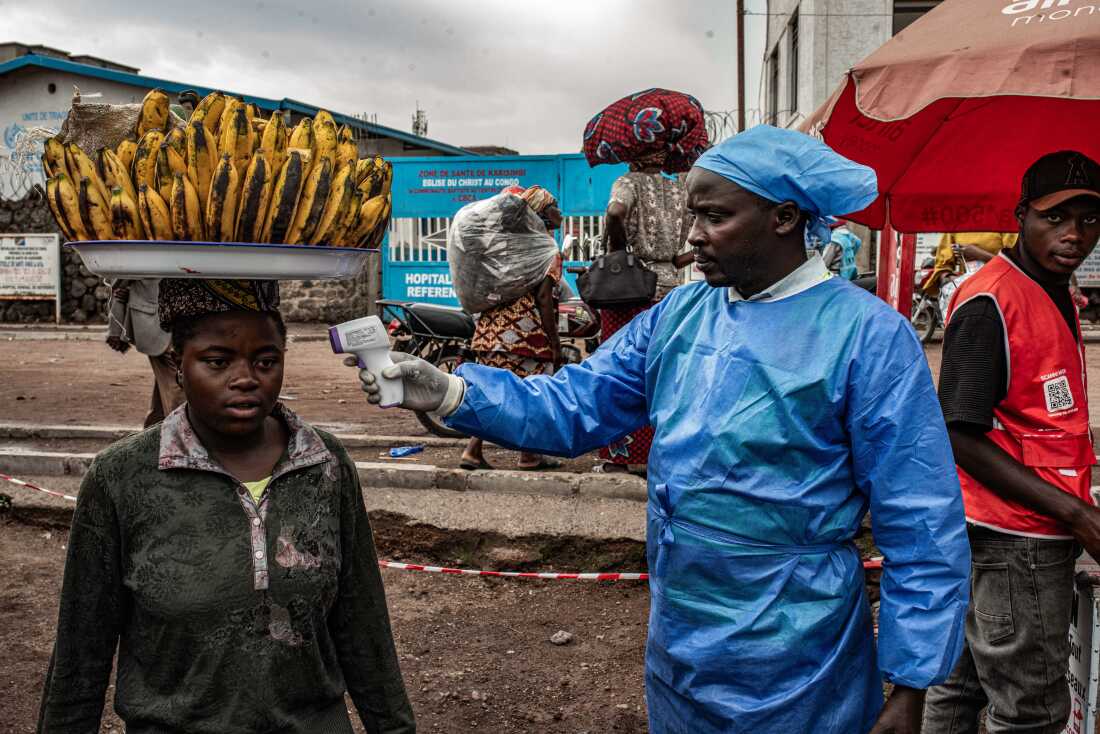
A health worker takes a woman's temperature as part of Ebola screening efforts in Goma, Democratic Republic of Congo. As part of the effort to quash the outbreak, the first patients have been enrolled in a clinical trial to test two drugs against the Bundibugyo strain of the virus that is spreading there. In addition, researchers plan to study whether another drug could protect people exposed to the virus. Daniel Buuma/Getty Images hide caption
toggle caption
Daniel Buuma/Getty Images
It's been over 50 days since the Ebola outbreak was declared in the Democratic Republic of Congo and Uganda. Clinicians on the ground are working to save dying patients, but they lack crucial tools to fight the kind of Ebola that's spreading.
"We urgently need treatments that can help people affected by Bundibugyo virus disease," says Amanda Rojek, a physician scientist at the University of Oxford — that's a rarer species of Ebola than the much-researched Zaire strain behind many previous outbreaks.
But because of that rarity, there are no specialized treatments to give patients. Nor are there drugs that might protect those exposed to the virus from getting sick.
That reality is changing. Clinical trials are underway, or soon will be, to test new tools that health officials hope could help turn the tide against an outbreak that has already killed over 500 people and sickened more than 1,560 — and which some say could become the largest Ebola outbreak ever.
Last Thursday, the World Health Organization announced that the first patients were enrolled in a clinical trial designed to test two drugs against Bundibugyo. And sometime this week, researchers will likely begin studying whether another drug could protect people exposed to the virus.
"One of the key lessons from recent outbreaks is that research needs to happen alongside the response, not after it," says Rojek, who is helping to coordinate the treatment trials.
The three trials are a collaborative effort between WHO, Africa CDC, universities and nonprofits. Each will test existing drugs against Bundibugyo.
"To start from scratch takes years," says Salim Abdool Karim, director of the Centre for the AIDS Programme of Research in South Africa and member of the Africa CDC emergency committee that's been following the outbreak. "So we take existing medicines and see whether [they] can be repurposed."
"This will take some time"
For Ebola treatment, researchers are testing two drugs: the antiviral remdesivir, manufactured by Gilead Sciences, and the monoclonal antibody MBP-134, developed by Mapp Biopharmaceutical. Both drugs are delivered intravenously.
Remdesivir rose to prominence during the COVID-19 pandemic, when it was used (to mixed effect) to treat patients in the hospital. But the drug was developed to target a broad range of viruses, including Ebola. It was tested during the 2018 Ebola outbreak in the Democratic Republic of Congo, but proved relatively ineffective against the Zaire species.
MBP-134 is a monoclonal antibody treatment designed to mimic the immune system's natural defenses against the virus. It's a cocktail of two monoclonal antibodies, both isolated from a survivor of the 2014-2016 West African Ebola outbreak, also caused by the Zaire species. But there's some lab data that suggests it could work against Bundibugyo.
The Biomedical Advanced Research and Development Authority, or BARDA, played a major role in funding research behind MBP-134 and technically owns the doses. BARDA is a U.S. government agency within the Department of Health and Human Services and the government has donated the doses necessary for the clinical trial, according to Vasee Moorthy, WHO's research and development lead for the outbreak.
Each drug will be tested alone, and in combination, against the current standard of care — supportive therapy that aims to replace lost fluids and manage pain. So far, only one clinic in the DRC is involved in the trial, but there are plans to expand in the coming weeks, said Moorthy at a press conference last Thursday.
Researchers will monitor whether the drugs boost survival. How long that takes depends on a variety of factors, said Moorthy.
"From what we see at the moment, this will take some time," he said. "It will take some months. It could go even into next year. It could be that we need over 1,000 patients enrolled in the trial until we get a definitive answer." If either treatment proves super effective, that timeline could be shorter, he said.
Treatments aren't enough
To help control the epidemic, which shows no sign of slowing anytime soon, health officials need more than treatments. They need to prevent people from becoming sick, says Yazdan Yazdanpanah, an infectious disease physician and epidemiologist at ANRS Emerging infectious diseases, a research agency in France.
A vaccine would be best, "but we don't have a vaccine today," he says, and it'll be months before testing candidates begins. But giving an antiviral soon after exposure can help prevent disease and could be faster-acting than a typical vaccine.
That's where the third trial comes in, which is slated to start sometime this week, says Yazdanpanah. He and his colleagues will be testing whether popping obeldesivir pills, an antiviral also made by Gilead Sciences, can help prevent close contacts of Ebola cases from contracting the disease, a method known as post-exposure prophylaxis.
The study relies heavily on contact tracers quickly identifying anyone who might have been exposed to an Ebola patient. For contacts who enroll, the research team will go to the participant twice a day to deliver the drug and track whether they develop symptoms.
If obeldesivir proves effective, it could become a powerful tool for reining in the epidemic, says Yazdanpanah. It could also help attract more contacts to come forward, since health officials would have something to give them besides instructions to quarantine.
Challenges ahead
Proving the effectiveness of any of these three drugs will depend on the clinical trials running smoothly. That's a challenge in any outbreak, especially one beset by ongoing armed conflict.
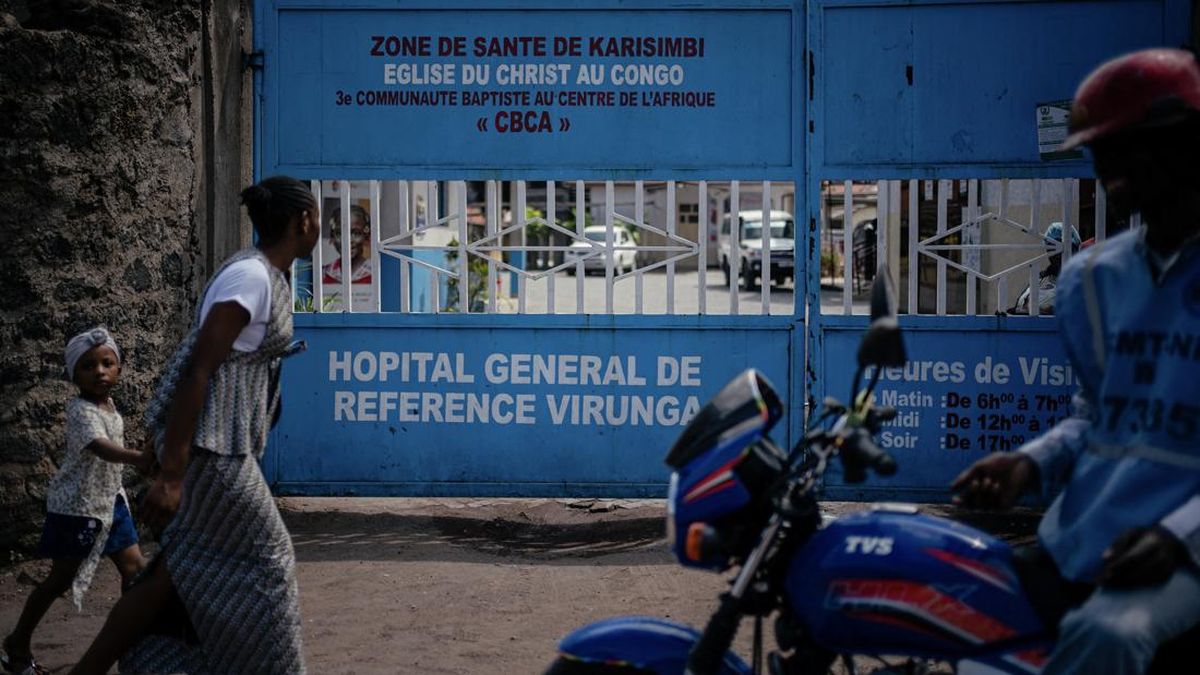
There's also been violence aimed at health centers. Several have been attacked since the outbreak, likely spurred by mistrust. Community members are often wary of outside health workers who descend on their town in full protective gear. Rumors swirl that humanitarian aid groups are murdering people or withholding care.

In fact, WHO officials declined to disclose the exact location of the clinic now enrolling patients for the treatment trials to protect its clinicians.
"There's a lack of trust," says Yazdanpanah. Building that community trust is crucial for running an effective and ethical clinical trial. WHO officials are hoping that will result from holding lots of community advisory meetings, with everyone from healthcare workers to faith groups participating.
"Discussions with the community are absolutely central," said Moorthy. "There are open lines of communication to the trial team from the community, so that we can make sure that their interests come first."