 1 month ago
70
1 month ago
70

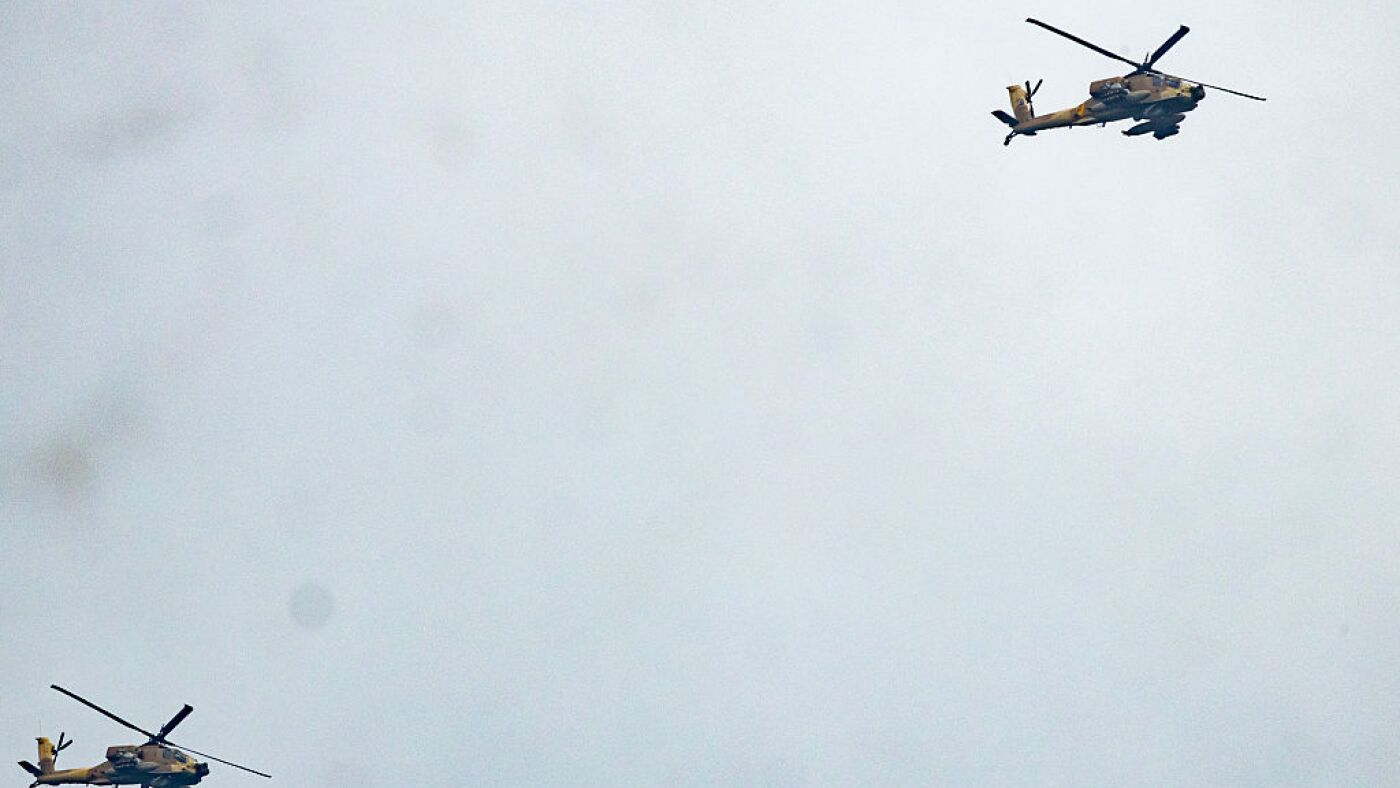
Two Israeli soldiers operate in southern Lebanon, as seen from northern Israel, April 29, 2026 Ariel Schalit/AP hide caption
toggle caption
Ariel Schalit/AP
MANSOURI, Lebanon — The center of the village lies in ruins. A row of single-story shops blown out, goods scattered on the ground, glass shattered along the sidewalk. Homes and buildings are crumpled into themselves, unrecognizable. The mosque is blackened and burned, the minaret split in two. A Lebanese civil defense emergency vehicle is crushed next to the rubble, its windshield smashed.
Mansouri, a small village in the undulating hills of Lebanon's south is about six miles from the country's 's border with Israel, but it now lies less than a mile from what Israel has called the "yellow line" in the south — marking the large swath of land now occupied by Israeli troops.
Thirty-five-year-old Abed Ammar stands on the main street, looking at the destruction. He works as an emergency responder and returned to Mansouri on the first day of the temporary ceasefire between Israel and Hezbollah earlier this month, with his family, to their house up on the hill, which he says was only lightly damaged.
He says they hear controlled demolitions happening in the neighboring villages now occupied by Israel.
"The demolitions are louder than airstrikes," he says. "We can hear them very clearly from here."
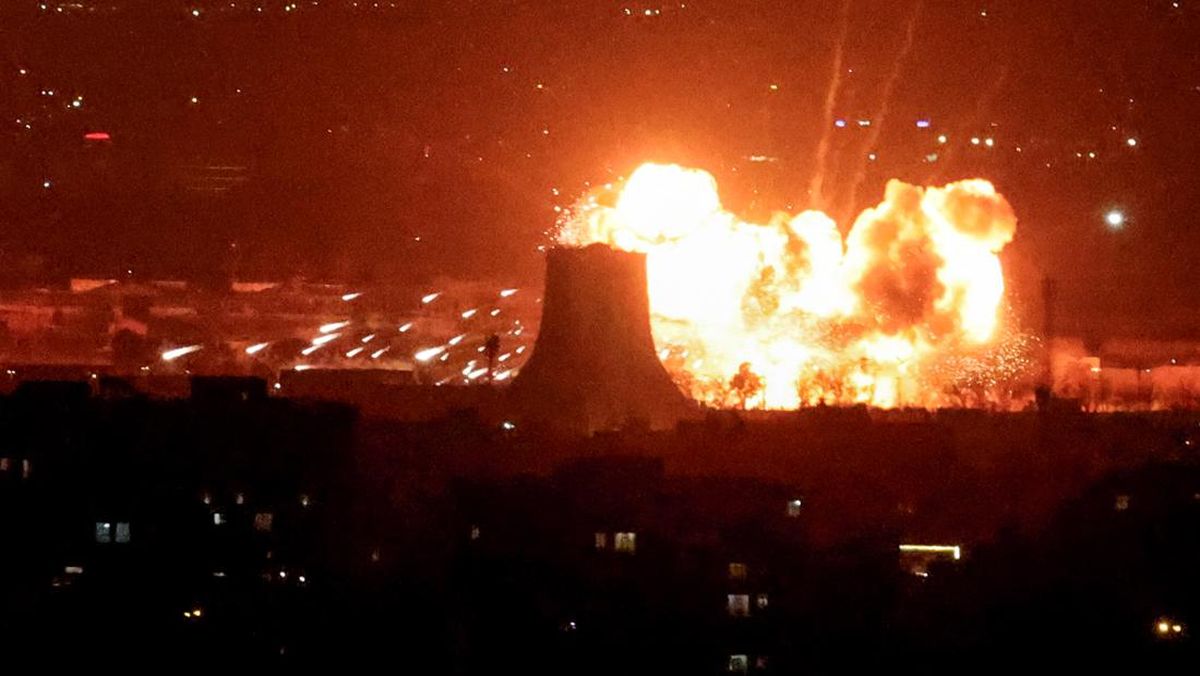
Israel has been very public about the controlled demolitions its military has been carrying out in many of the 55 Lebanese towns and villages it now occupies in the south. The Israeli military has been publishing videos on social media and in releases to the press showing entire neighborhoods eviscerated in seconds, the concrete homes and shops erupting into clouds of dust at the push of a detonator.
Israel says it's destroying Hezbollah infrastructure. And that the goal is to create what Israel calls a "buffer zone" along its border, in order to keep Hezbollah from attacking its northern residents.
But those demolitions — along with widespread Israeli airstrikes throughout the past two months — have also significantly destroyed civilian infrastructure. Such destruction is considered to be a violation of international law, and a potential war crime.

Displaced people cross on foot over a destroyed bridge as they return to their villages following a ceasefire between Hezbollah and Israel, in Tayr Felsay village near the city of Tyre, southern Lebanon, April 19, 2026 Bilal Hussein/AP hide caption
toggle caption
Bilal Hussein/AP
"We are witnessing the continuing utmost contempt for the international legal order, for diplomacy, and above all for the lives of civilians and the environment in Lebanon," a group of human rights experts appointed by the United Nations wrote in a recent joint press release, noting that the issuance of what they called "blanket evacuation orders" and destruction of housing was consistent with Israel's actions in Gaza.
Particularly in the part of southern Lebanon now occupied by Israel, the destruction mirrors Gaza — something Israeli officials have openly discussed.
"The fate of southern Lebanon will be the same as that of Gaza," Israeli Defense Minister Israel Katz said earlier this week, after the Israeli military blew up what it said was a massive stash of Hezbollah weapons in the south. He said Hezbollah is to blame for Israel's demolition of Lebanese homes and villages.
An NPR team went as far south as possible during this current ceasefire, all the way to the edge of the Israeli-occupied area, passing buildings pancaked by airstrikes, people's personal possessions strewn amid the rubble and cars hollowed out by flames. Lebanese officials estimate some 62,000 homes have been damaged or destroyed since the beginning of March alone.
Loading...
There is no access to the area in southern Lebanon now occupied by Israel – not for residents or journalists. But satellite imagery can help to give a sense of the overall destruction.
Corey Scher is a postdoctoral researcher at the Conflict Ecology laboratory at Oregon State University, which does satellite monitoring in conflict zones. He's been studying both Gaza and southern Lebanon — and he says a similarity is starting to emerge between the two.
"Previously damaged areas in Lebanon are now being completely leveled. And it looks like what Gaza looked like, when we also saw a complete leveling," he says. "The striking part for me, and a commonality, is that you just see large swaths of towns, villages being effectively wiped off the map."
Loading...
He says they've noted this being carried out in both places by the Israeli military through widespread airstrikes, followed by a ground invasion and controlled demolitions.
Israel has also been striking crucial infrastructure like bridges in southern Lebanon, taking out every major crossing over the Litani River heading to the south during the past two months of war. In the final hours before this current temporary ceasefire was announced, an Israeli strike hit the coastal Qasmiyeh bridge, the last remaining crossing to the south.
Loading...
Israel says the bridges were used by Hezbollah for weapons transport. But they're also used by civilians, and aid and emergency workers trying to reach the areas most affected by the fighting.
Humanitarian organizations have also noted that critical water infrastructure has been hit by Israel — again a documented pattern in Gaza as well, and something NPR has reported Israel doing in past wars in Lebanon.
In a statement in March, Oxfam warned that Israeli forces were "using the Gaza playbook in Lebanon," noting extensive damage to water infrastructure, but also electricity networks and bridges, "cutting off vital supplies and services for entire towns and villages."
Israel has denied that its attacks against such infrastructure are deliberate, instead framing its operations as necessary for national security.
For the residents of the areas now under Israeli occupation, there's a great sense of despair. They no longer have the choice to return home.
Fifty-year-old Zainab Mahdi is from Naqoura, a coastal village right on the Mediterranean only a few miles from the Israeli border. It is now occupied by Israeli troops.
Mahdi has been living in a temporary shelter in the city of Tyre since 2024, after fleeing her home in the last major war. Her home was damaged in that war; during the relative peace of the last ceasefire, she was working to rebuild it. Now, she's heard from U.N. peacekeepers in the area that it's completely gone, along with most of the village.
"I'm angry, and I'm sad," she says. "But I'm also feeling a lot of fear – fear about how long it will be before we can return? What if that doesn't happen in my lifetime? God, it looks like it's going to be a long time."
Last time Israel occupied southern Lebanon, it did so for nearly two decades. Now, Israel has said it's prepared to stay for months, even years.
Mahdi says she had a beautiful garden at home that she's heard has now been bulldozed. But she says she'll go back, as soon as she can.
"Just smelling our own soil is enough," she says. "Just sitting down on your own land in your own village, it lifts your spirits, despite everything."