 2 months ago
61
2 months ago
61

Israeli emergency responders inspect a scene of a direct ballistic hit, after it was launched from Iran on April 02, 2026 in Petach Tikva, Israel. Iran has continued firing waves of drones and missiles at Israel after the United States and Israel launched a joint attack on Iran early on February 28th. Amir Levy/Getty Images hide caption
toggle caption
Amir Levy/Getty Images
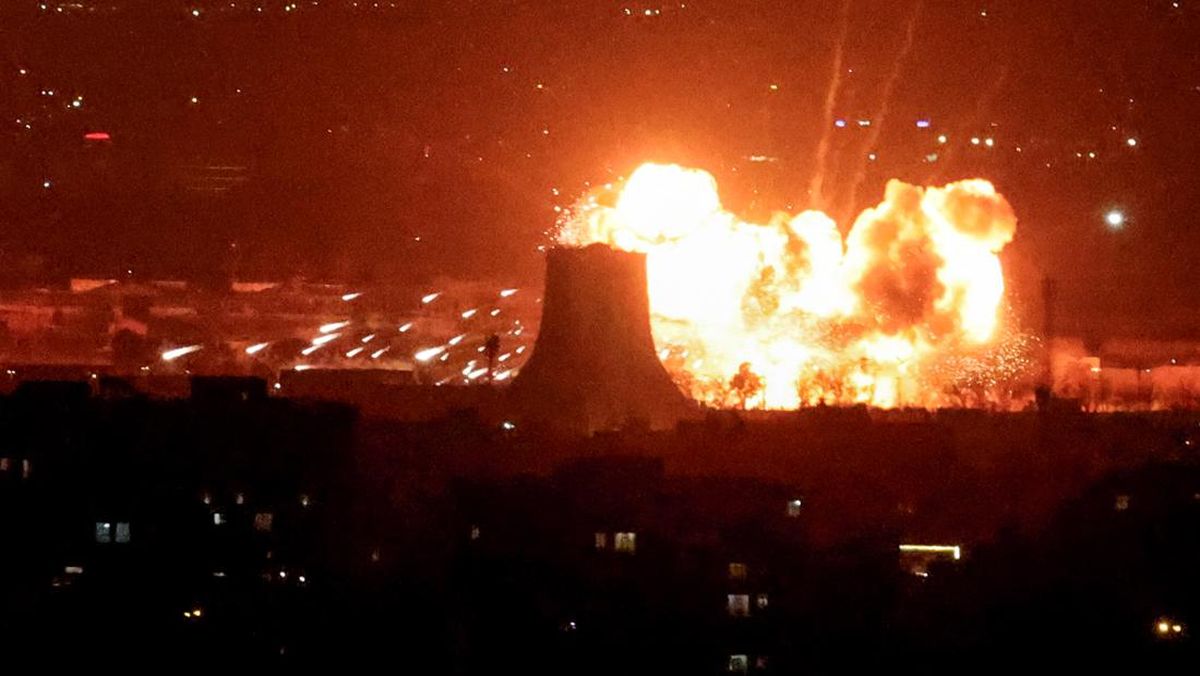
Blasts and sirens rang out across Israel, Kuwait, the United Arab Emirates and Saudi Arabia on Friday as air defense systems tried to stave off Iranian drones and missiles. At least two refineries were set on fire by drone attacks or falling debris. The strikes came as President Trump repeated his threat to Iran's leadership on Day 35 of the war.
"Our military… hasn't even started destroying what's left in Iran," Trump posted late Thursday on social media. "Bridges next, then Electric Power Plants!"
He added: "New Regime leadership knows what has to be done, and has to be done, FAST!"
Iranian officials said one of the longest bridges linking Tehran to the city of Karaj was destroyed overnight.
Among targets hit by Iran on Friday was Kuwait's largest oil refinery, setting some of its units on fire. Authorities in UAE reported an incident at Habshan gas facility from falling debris.
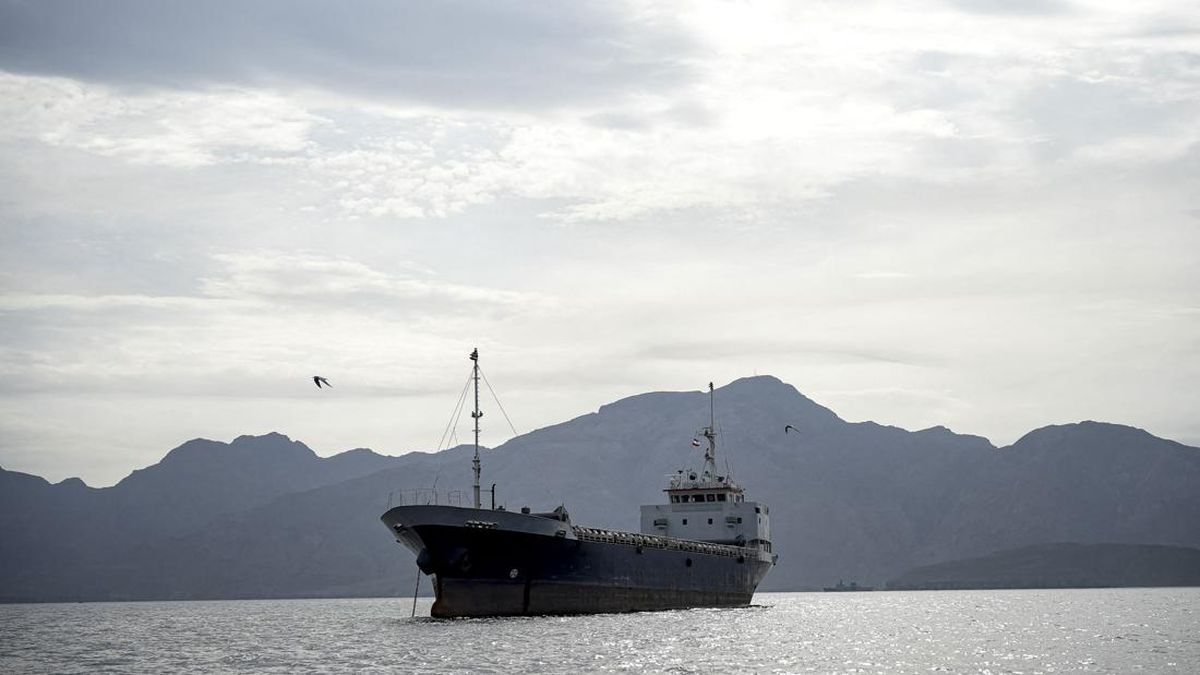
The exchange of strikes and threats came amid renewed global efforts to reopen the Strait of Hormuz, a strategic waterway for the oil supply, which has been blocked by Iran in retaliation for the U.S. and Israeli strikes against it that began on Feb. 28. The blockade has sent up prices of oil, gas and fertilizer.
The Brent crude oil price went up by 7.8 percent on Friday, standing at US$109.03 per barrel.
Here's more news from the war on Iran on Friday:
U.S. strikes on Iran | Iran attacks Gulf refineries | Strait of Hormuz talks | Investigation on Iran attacks
One of Iran's largest bridges destroyed in U.S. strikes
The B1 bridge west of the capital Tehran, connecting it to the city of Karaj, was under construction when it was hit in an attack late Wednesday. Iran's security forces said eight people were killed in the attack.
More strikes were reported across Iran overnight Thursday.
Iran's Revolutionary Guard threatened to hit major bridges in the Gulf region in retaliation.
Trump has threatened the U.S. will hit more civilian infrastructure including power plants by next week if Iran's leadership does not open the Strait of Hormuz. The threat has been criticized by many Iranians, even those who oppose the regime, like opposition figure Reza Pahlavi, the son of the former shah, due to the hardship it would cause ordinary Iranians.

A bridge struck by U.S. airstrikes on Thursday is seen in the town of Karaj, west of Tehran, Iran, Friday, April 3, 2026. Vahid Salemi/AP hide caption
toggle caption
Vahid Salemi/AP
"If you are saying that if these people are separate from the government and you have just come here to just topple this regime, then why are you attacking this power plant?" an Iranian who fled Tehran told NPR this week.
In response to the attacks, Iran's foreign minister, Abbas Araghchi said on a post in social media "striking civilian infrastructure will not compel Iranians to surrender."
Iran launches missile and drone attacks on Israel, Gulf
Kuwait's Petroleum Corporation said on Friday several units at the country's largest oil refinery, Mina Al-Ahmadi, were on fire following a drone attack.
Emergency teams were working to contain the fires and no injuries were reported. The refinery has been a target of Iranian drones in the past.
The Kuwait Army also said its air defense systems were responding to hostile missiles and drone threats.
Authorities in the United Arab Emirates reported a fire in the country's Habshan gas facility caused by falling debris from an intercepted attack.
Saudi Arabia's ministry of defense also said it intercepted and destroyed about a dozen drones.
Israel's health ministry said on Friday that it has treated 148 people in the last day, the majority for minor injuries. Some 6,594 people received treatment since the war began, according to the ministry's post on social media.
Nations mull diplomatic pressure on Iran over Strait of Hormuz, but reach no agreement
Leaders of 40 countries, who convened virtually on Thursday at the request of the British government, discussed diplomatic pressure and economic measures to compel Iran to reopen the Strait of Hormuz, but did not agree to any specific steps.
The meeting, hosted by U.K. foreign secretary Yvette Cooper, included representatives from European countries, Canada, the United Arab Emirates – but not of the countries that launched the war: the U.S. and Israel.
Earlier this week, Trump said the blocked strait didn't affect the U.S. and told other countries to fend for themselves if they wanted to get it reopened. Cooper said the rest of the world had been left to deal with the consequences of the Iran war.
She said that by blocking the Strait of Hormuz, Iran was "hijacking a global shipping route" and was "holding the global economy hostage."
"This is hitting the trading for Kuwait, Bahrain, Qatar, the UAE, Saudi, Oman , Iraq… but that means liquid natural gas for Asia, fertilizer for Africa and jet fuel for the world," Cooper added.
She said that traffic through the strait had plunged from 150 vessels a day to 10-20 ships a day.
The meeting discussed diplomatic pressure on Iran as well as sanctions if Iran continues to keep the passage closed. They rejected any attempts by Iran to impose tolls on ships passing through the waterway.

A residential building damaged by recent U.S.-Israeli strikes is seen with a sign on its wall that reads in Farsi: "We stand till the end," in Fardis, west of Tehran, Iran, Friday, April 3, 2026. Vahid Salemi/AP hide caption
toggle caption
Vahid Salemi/AP
Cooper said that military planners from the countries attending the meeting would meet next week to think about defensive capabilities for security of the strait, once the fighting stops.
Officials also said they would work with the International Maritime Organisation to try to help about 20,000 sailors and thousands of ships stranded in the Strait of Hormuz.
French President Emmanuel Macron said on Thursday the idea of using force to reopen the Strait - as suggested by Trump - is "unrealistic", adding that that would leave cargo ships in the strait vulnerable to Iranian attacks.
Macron and South Korean President Lee Jae Myung said on Friday they would cooperate to reopen the strait, according to the Associated Press.
U.S. allies have repeatedly said they're not going to get involved militarily in the hot phase of the war.
Bellingcat says UAE downplayed Iranian attacks in a new report
Investigative outlet Bellingcat has a new report showing several Iranian attacks on the United Arab Emirates that were apparently downplayed or mischaracterized in official statements.
The government did not immediately respond to NPR's request for comment on the report.
Bellingcat, which uses open source data, said a video shared by a migrant worker shows what appears to be an Iranian drone hitting fuel storages in the emirate of Fujairah in early March. Satellite imagery shows three tanks destroyed. But Bellingcat notes Fujairah's media office said a fire had resulted from debris following a successful interception - though no interception can be seen.
In other examples, apparent drone strikes on Dubai's airport and a hotel were not acknowledged as such.
Bellingcat also said satellite imagery shows two fires over a mile apart at Dubai's port last month, including an area used by the U.S. Navy. But authorities acknowledged just one fire at the time.
Emily Feng contributed to this report from Istanbul, Fatima Al-Kassab from London, Aya Batrawy from Dubai and Tina Kraja from Washington, DC.