 3 months ago
88
3 months ago
88

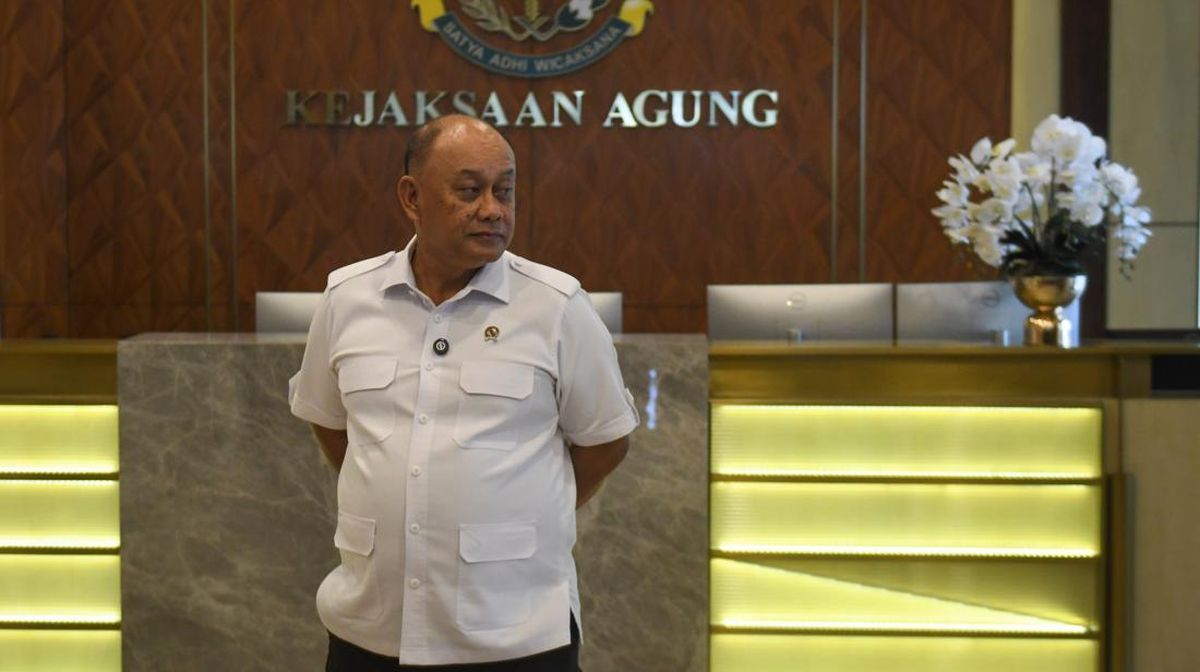
Nicholas Enrich worked for the United States Agency for International Development under four administrations and was dismissed after leaking memos detailing plans to shut it down. He writes about the end of USAID — and his role in the response to a 2025 Ebola outbreak — in his new book, Into the Woodchipper: A Whistleblower's Account of How the Trump Administration Shredded USAID. Simon & Schuster hide caption
toggle caption
Simon & Schuster
In March 2025, Nicholas Enrich was the top U.S. official for global health when two major events were happening at the same time: The Trump administration was dismantling USAID, and an Ebola outbreak was spreading in Uganda.
It was Enrich's job to manage the U.S. response. He says he was stymied at every turn.
"I was told by one of the political appointees, who was the head of the Bureau for Humanitarian Assistance, that Ebola is a scam," Enrich says.
A year later, as the worst Ebola outbreak in more than a decade spreads in the Democratic Republic of the Congo, Enrich has published a timely book with a title drawn from Elon Musk's plans for the premier U.S. foreign aid agency: Into the Woodchipper: A Whistleblower's Account of How the Trump Administration Shredded USAID.
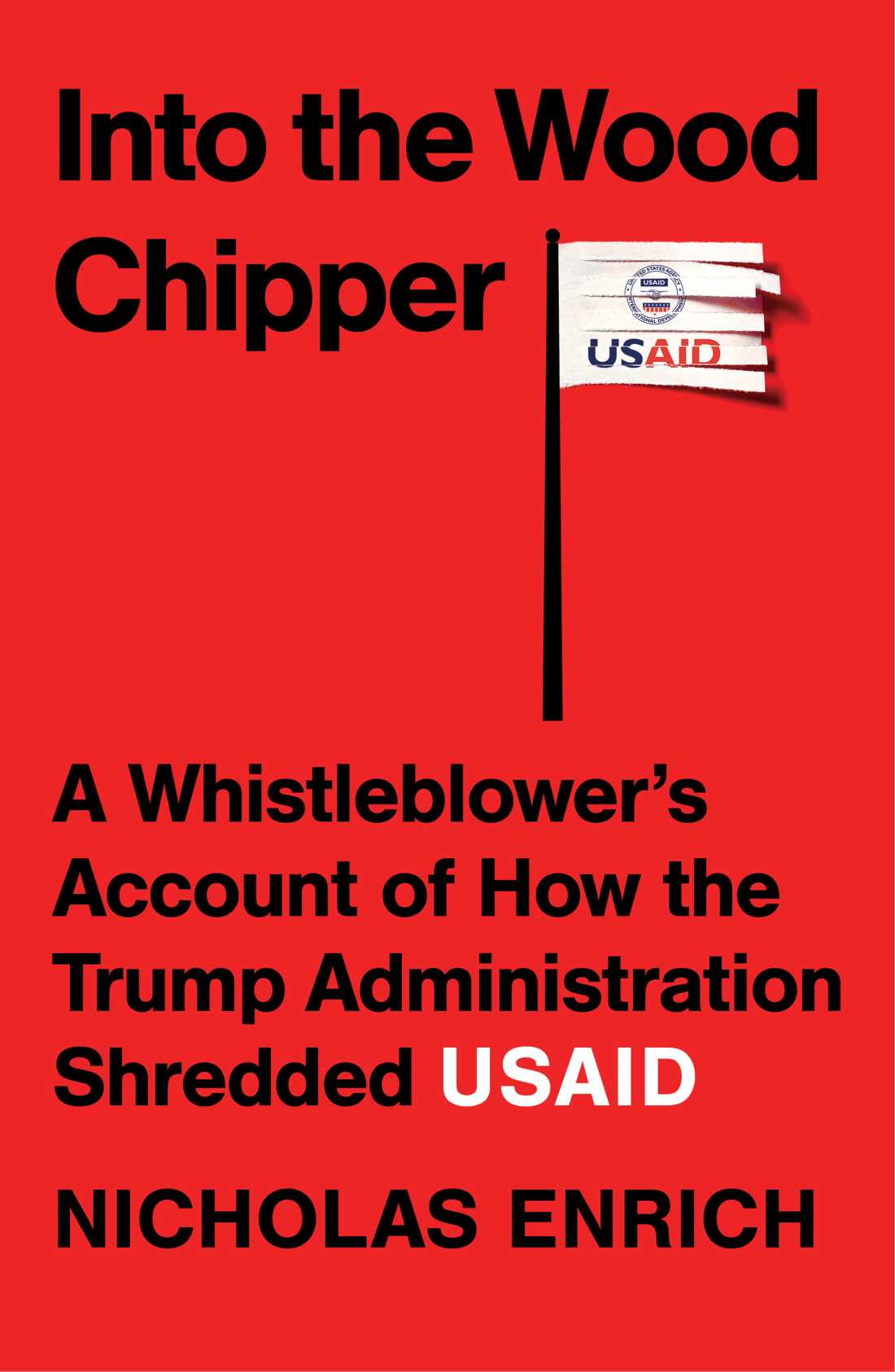
It's written from the perspective of a civil servant who served at the premier U.S. foreign aid agency under four administrations –- until he was put on leave and then dismissed after leaking memos about plans to dismantle the agency.
In an interview with NPR , Enrich talked about his view of the agency and his perspective on the current Ebola outbreak in a world where USAID no longer exists.
This interview has been edited for length and clarity.
Let's start with a controversial question. The administration gave various rationales to justify the sunsetting of USAID –- accusations of political bias, waste, fraud and abuse. Did you agree with any of their points?
Okay, I'm gonna say yes, but before I talk about them, it's important to recognize that the agency was not destroyed because it was wasteful or because it didn't work or because they wanted to realign aid with the American First priorities. It was destroyed by a bunch of people who did not understand what the agency did, who were completely uninformed and unqualified about our programs, and who were there tearing down the agency that they didn't get for the sole purpose of soothing the ego of a billionaire.
That's a very stark explanation.
One of the reasons I wrote this book was to make sure that it's very, very clear why the agency was destroyed and why it wasn't. That said, I think that there are ways that aid could have been more efficient and could have been less likely to foster dependency in ways that it had.
But you know, I also want to make the point that USAID actually was considered one of the most efficient agencies within the government [operating] on less than 1% of the federal budget. We, among many other things, saved the lives of 92 million people over the last 20 years alone, which is a staggering impact for a relatively shoestring budget. So it's not that we weren't efficient, it's just that, of course, there were ways that we could have become more so.
You were put on leave immediately after leaking the memos. Looking back, is there anything you would have done differently in your final months there?
I do feel like I was quite naive. I was a civil servant for my whole career, and I was no activist or advocate. So it did not come naturally to me to stop and say: "Wait a minute. This is not an opportunity for me to figure out how to administer the policies of this administration. This is completely off the rails and is a violation of laws, of court orders, of congressional intent and it is unethical and causing destruction and harm to public safety." And I wish that I had been able to say earlier, "This is not okay and I cannot continue to work within the bounds of these walls that are collapsing around me to try to save this tiny bit of our program."
I wish I had said I need to not agree to some of the directives, because I did [agree]. I did implement directives from our political leadership that I'm not proud of, like making lists of our staff, knowing that some of those people would be terminated, or taking life-saving activities off the list of what I was asking to be approved.
For example…?
I was told by the political appointees, for example, that they wouldn't be approving any of the Ebola activities, because Ebola was a scam, and so I made a decision that I regret to this day of removing Ebola activities from those that I was hoping to get approved.
You were involved in Ebola efforts even before the Uganda outbreak last year. What was the agency's position on the virus?
I was thrust into the top official of global health role for the agency and my job was to set up a robust U.S. government response to the Ebola outbreak, and I was just stopped at every single turn. It started with the refusal to even allow us to screen passengers at international airports for symptoms of Ebola before they got onto flights that were headed to Europe and potentially onward to the United States.
And we were never able to even get a team into the country. They had banned us from communicating with our sister agencies like the CDC, which made it extremely difficult to manage an Ebola outbreak in the ways that we were used to. For example, in preparation for an outbreak like this one [we] had pre-positioned personal protective equipment in nearby Kenya so that it could be delivered to the outbreak zone within a matter of hours. But we were never able to move that, because the warehouse was owned by the World Health Organization, and our political leadership wouldn't even let us talk to the World Health Organization.
What's going through your mind as you see the news of the current Ebola outbreak in the Democratic Republic of the Congo?
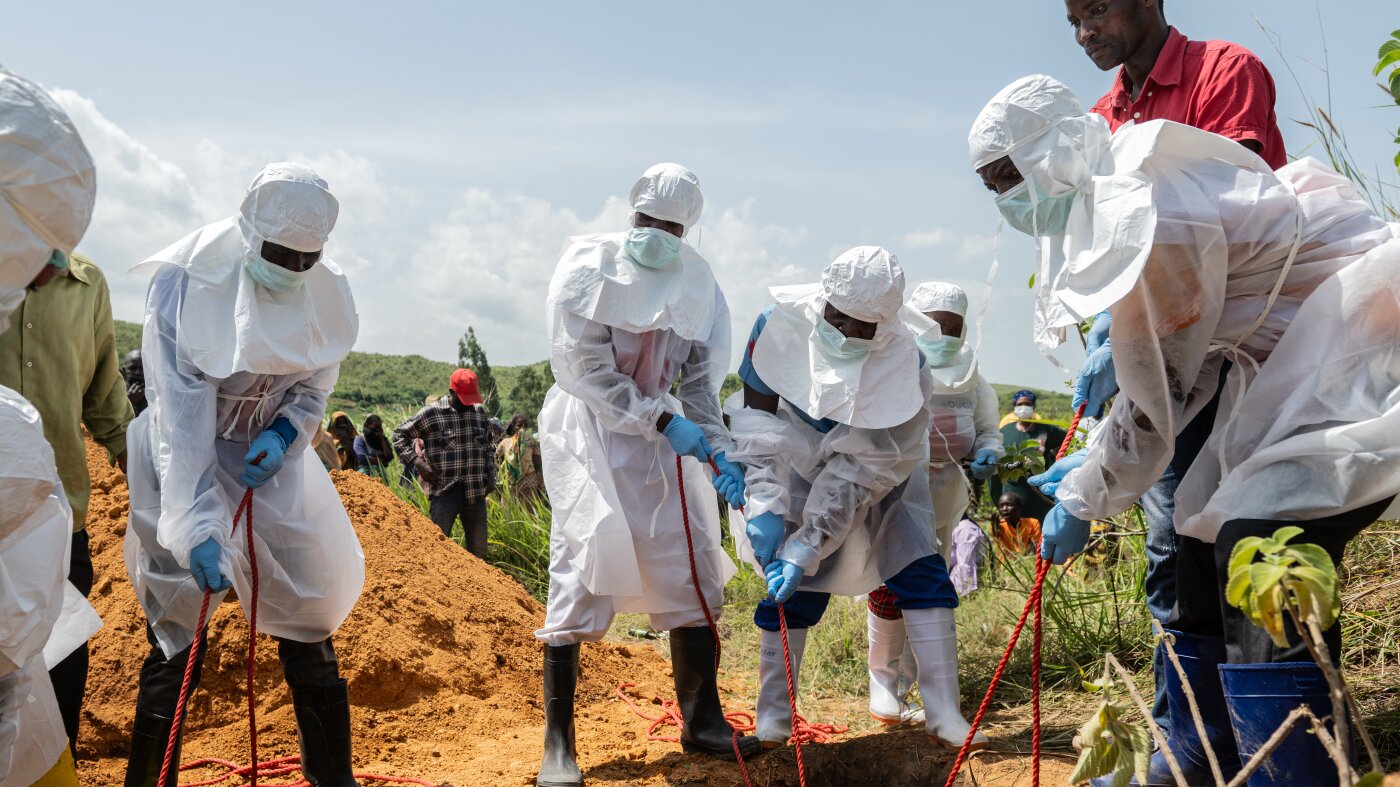
This is the first Ebola outbreak since USAID has been destroyed. I think about the systems and the expertise and the experience that USAID had in leading and coordinating responses to Ebola outbreaks — the way that we would immediately get our DART [Disaster Assistance Response Team] teams into place to move PPE [personal protective equipment], to coordinate partners in the country, to do contact tracing on a massive scale and community education and safe burial procedures. This is what we need in an outbreak — response with speed — and what instead we have without that expertise and systems from USAID is a State Department that, in the best of light, is rapidly trying to respond but is reinventing the wheel and trying to improvise systems that used to exist.
You were at USAID during the 2014 outbreak of Ebola as well. Were there lessons learned during that response that could have been implemented now with this outbreak if the agency were still around?
Because of the 2014 Ebola outbreak, we completely changed the way that we do infectious disease preparedness and have an entirely new global health security strategy. We invested billions of dollars in that time period to set up what my former boss [Atul Gawande] used to call the global immune system, which allowed for early detection and early response efforts. So we could make sure that our surveillance is in place and our testing is working and our community health workers know what to be looking for –- so we are detecting outbreaks at such an early stage that there's no time for them to spread.
And what has happened to that system?
That entire system was ripped apart in 2025. What we're seeing with Ebola in DRC {Democratic Republic of Congo] and Uganda and the recent hantavirus outbreak, these are a couple of examples within just a few weeks of how far American leadership has fallen in detection and response to infectious disease outbreaks.
It does make me nervous that if there is a pathogen that is more likely to be the next pandemic that we're just way, way underprepared as compared to how we were just a few months ago.
How do you think we should be talking about USAID at this moment?
I think of it as an era that I'm very proud of in American history and extremely proud of myself for getting just the opportunity to be a part of when the official policy of the United States government was to make the world a safer and healthier place. I'm sad that it's gone. I do remain optimistic, however, that we will need to have a new and independent agency that does international development and foreign aid — in the same way that no one would be satisfied folding the State Department into the Department of Defense because they do completely different pillars of foreign policy, so too does international development need a separate and unique kind of organizational structure to provide the third leg of the foreign policy stool.