 2 months ago
46
2 months ago
46

Nurses Brandy Frye (left) and Susan Fleishman work the night shift at Nanaimo Regional General Hospital in British Columbia. Both said they left their longtime U.S. jobs last year to get away from the policies and hateful rhetoric of President Trump. Taylor Pradine/KFF Health News hide caption
toggle caption
Taylor Pradine/KFF Health News
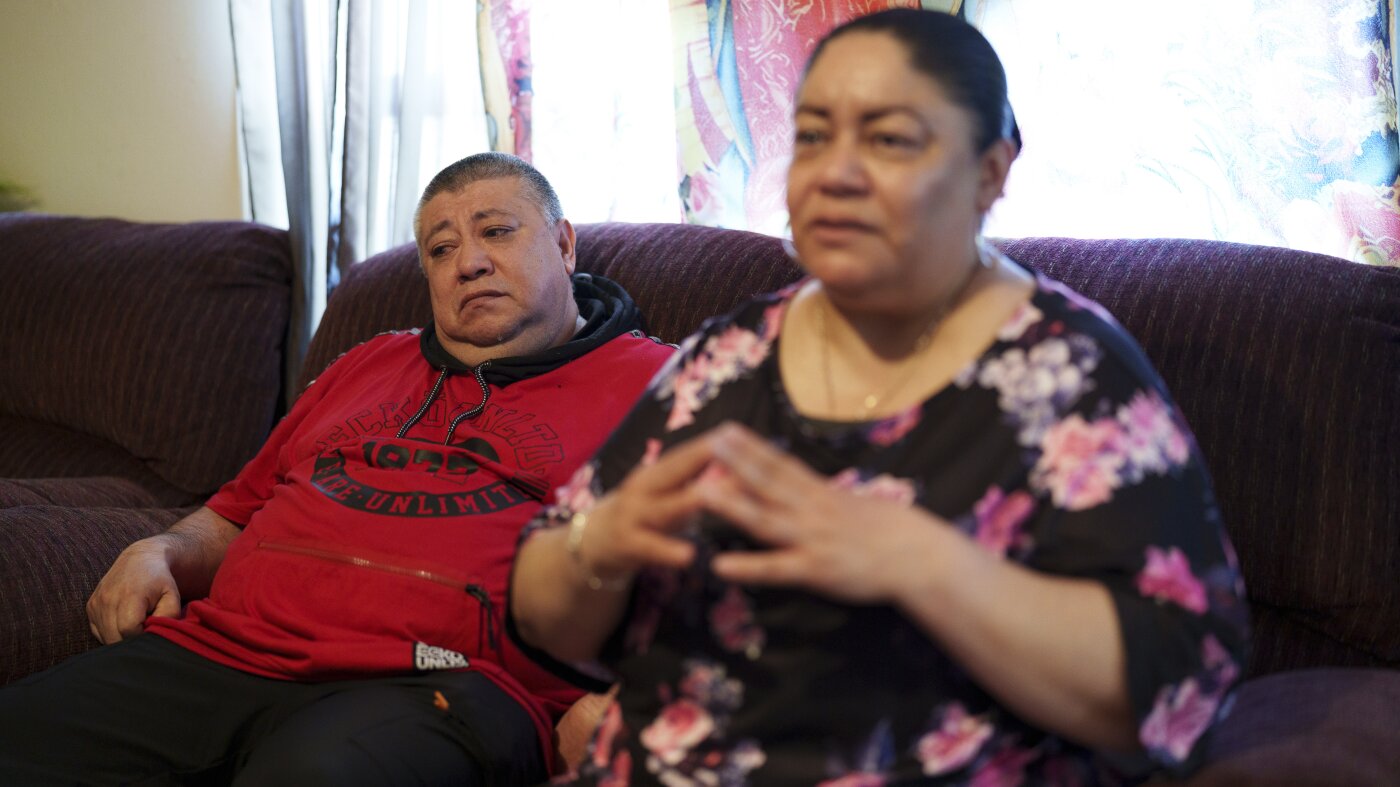
Last month, Justin and Amy Miller packed their vehicles with three kids, two dogs, a pet bearded dragon, and whatever belongings they could fit, then drove 2,000 miles from Wisconsin to British Columbia to leave President Trump's America.
The Millers resettled on Vancouver Island, their scenic refuge accessible only by ferry or plane. Justin went to work in the emergency room at Nanaimo Regional General Hospital, where he became one of at least 20 U.S.-trained nurses hired since April.
Trump, some of the nurses said, was why they left.
"There are so many like-minded people out there," said Justin, who now works elbow to elbow with Americans in Canada. "You aren't trapped. You don't have to stay. Health care workers are welcomed with open arms around the world."
The Millers are part of a new surge of American nurses, doctors, and other health care workers moving to Canada, and specifically British Columbia, where more than 1,000 U.S.-trained nurses have been approved to work since April.
Many nurses have felt the draw of Canada's progressive politics, friendly reputation, and universal health care system, which stands in contrast to what they see as authoritarian policies under Trump along with deep cuts to funding for public health, insurance, and medical research.

Additionally, some nurses were incensed last year when the Trump administration said it would reclassify nursing as a nonprofessional degree, which would impose strict federal limits on the loans nursing students could receive.
Canada is poised to capitalize. Two of its most populous provinces, Ontario and British Columbia, have streamlined the licensing process for American nurses since Trump returned to the White House. British Columbia also launched a $5 million advertising campaign last year to recruit nurses from California, Oregon, and Washington state.
"With the chaos and uncertainty happening in the U.S., we are seizing the opportunity to attract the talent we need," Josie Osborne, the province's health minister, said in a statement announcing the campaign.
Fears realized
Amy Miller, a nurse practitioner, said she and her husband were determined to move their children out of the country because they felt Trump's second term would inevitably spiral into violence.
First, the Millers got nursing licenses in New Zealand, but when the job search took too long, they pivoted to Canada.
Justin was offered a job within weeks.
Amy found one within three months.
So they moved. And just a few days later, the Millers watched with horror from afar as their fears came true.
As federal immigration forces clashed with protesters in Minneapolis on Jan. 24, federal agents fatally shot an ICU nurse, Alex Pretti, as he filmed a confrontation and appeared to be trying to shield a woman who was knocked down. Video of the killing showed border agents pinning Pretti to the ground before seizing his concealed, licensed handgun and then opening fire on him.
The Trump administration quickly called Pretti a "domestic terrorist" who intended to kill federal agents. That allegation was disputed by eyewitness videos that circulated on social media and spurred widespread outrage, including from nurses and nursing organizations, some of whom invoked the profession's duty to care for the vulnerable.
"I don't want to say it was expected, but that's why we are here," Amy Miller said. "Even our oldest kid, she was like: 'It's OK, Mom, because we are not there anymore. We are safe here.' So she recognizes that, and she's not even in middle school yet."
Both the U.S. and Canada have a severe need for nurses. The U.S. is projected to be short about 270,000 registered nurses, plus at least 120,000 licensed practical nurses, by 2028, according to recent estimates from the Health Resources and Services Administration. In Canada, nursing job vacancies tripled from 2018 to 2023, when they reached nearly 42,000, according to a recent report from the Montreal Economic Institute, a Canadian think tank.
When asked to comment, the White House noted that industry data shows the number of nurses licensed in the U.S. increased in 2025. It dismissed accounts of nurses moving to Canada as "anecdotes of individuals with severe cases of Trump derangement syndrome."
"The American health care workforce is the finest in the world, and it continues to expand under President Trump," White House spokesperson Kush Desai said. "Employment opportunities in the American health care system remain robust, with career advancement and pay that far exceed that of other developed nations."
'A sense of relief'
It is unknown precisely how many American nurses have moved north since Trump returned to office, because some Canadian provinces do not track or release such statistics.
British Columbia, which has done the most to recruit Americans, approved the licensing applications of 1,028 U.S.-trained nurses from when the province's streamlined application process took effect in April 2025 through January, according to the British Columbia College of Nurses and Midwives. In all of 2023 only 112 applicants from the U.S. were approved, the agency said. In 2024, it was 127.
Increased interest from American nurses was also confirmed by nursing associations in Ontario and Alberta, as well as by the nationwide Canadian Nurses Association.
Angela Wignall, CEO of Nurses and Nurse Practitioners of British Columbia, said American nurses used to move north because they had fallen in love with Canada (or a Canadian). But more recently, she said, she had met nurses who feared the White House would spur violence and vigilantism, particularly against families that included same-sex couples.
"Some of them were living in fear of the administration, and they shared a sense of relief when crossing the border," Wignall said. "As a Canadian, it's heartbreaking. And also a joy to welcome them."
Vancouver Island, which has a population of about 860,000, has gained 64 U.S.-trained nurses since April, including those at Nanaimo Regional, said Andrew Leyne, a spokesperson for the island's health agency.
One of the nurses was Susan Fleishman, a Canadian who moved to the U.S. as a child, then worked for 23 years in American emergency rooms before leaving the country in November.
Fleishman said hateful rhetoric from Trump has fueled an angry division that has permeated and soured American life.
"It wasn't an easy move — that's for sure. But I think it's definitely worth it," she said, happily back in Canada. "I find there is a lot more kindness here. And I think that will keep me here."
Brandy Frye, an American nurse who also worked for decades in ERs, said she moved to Vancouver Island last year after waiting to see whether Mark Carney would become Canada's prime minister. Carney's rise was widely viewed as a rejection of Trumpism.
Meanwhile, Frye said, the California hospital where she worked had been stripping words associated with diversity and equity out of its paperwork to appease the Trump administration. She couldn't stand it.
"It felt like a step against everything I believe in," Frye said. "And I didn't feel like I belonged there anymore."
Like many of the American nurses who have moved to Vancouver Island, Frye was first wooed to the area by a viral video that was meant to attract tourist dollars but ended up doing much more.
About a year ago, Tod Maffin, a social media content creator and former CBC Radio host, invited Americans to the port city of Nanaimo for a weekend event designed to offset the impact of Trump's tariffs on the local economy.
Maffin said about 350 people attended the April event.
"A lot of them were health care workers looking for an escape route," Maffin said. "They were there to help support our economy but also to look into Canada."
Maffin saw an opportunity. He repurposed the event website into a recruiting tool and launched a Discord chatroom to help Americans relocate.
Maffin said he believes the campaign helped about 35 health care workers move to Vancouver Island. Volunteers in more than 30 other Canadian communities have since duplicated his website in an effort to attract their own American nurses and doctors.
"There are communities across Canada where the emergency room closes at night because one nurse is out. That's how thin staffing is," Maffin said.
"One new nurse in a small town, or in a midsized city like Nanaimo," he said, "makes a difference."
KFF Health News is a national newsroom that produces in-depth journalism about health issues and is one of the core operating programs at KFF.