 1 month ago
49
1 month ago
49

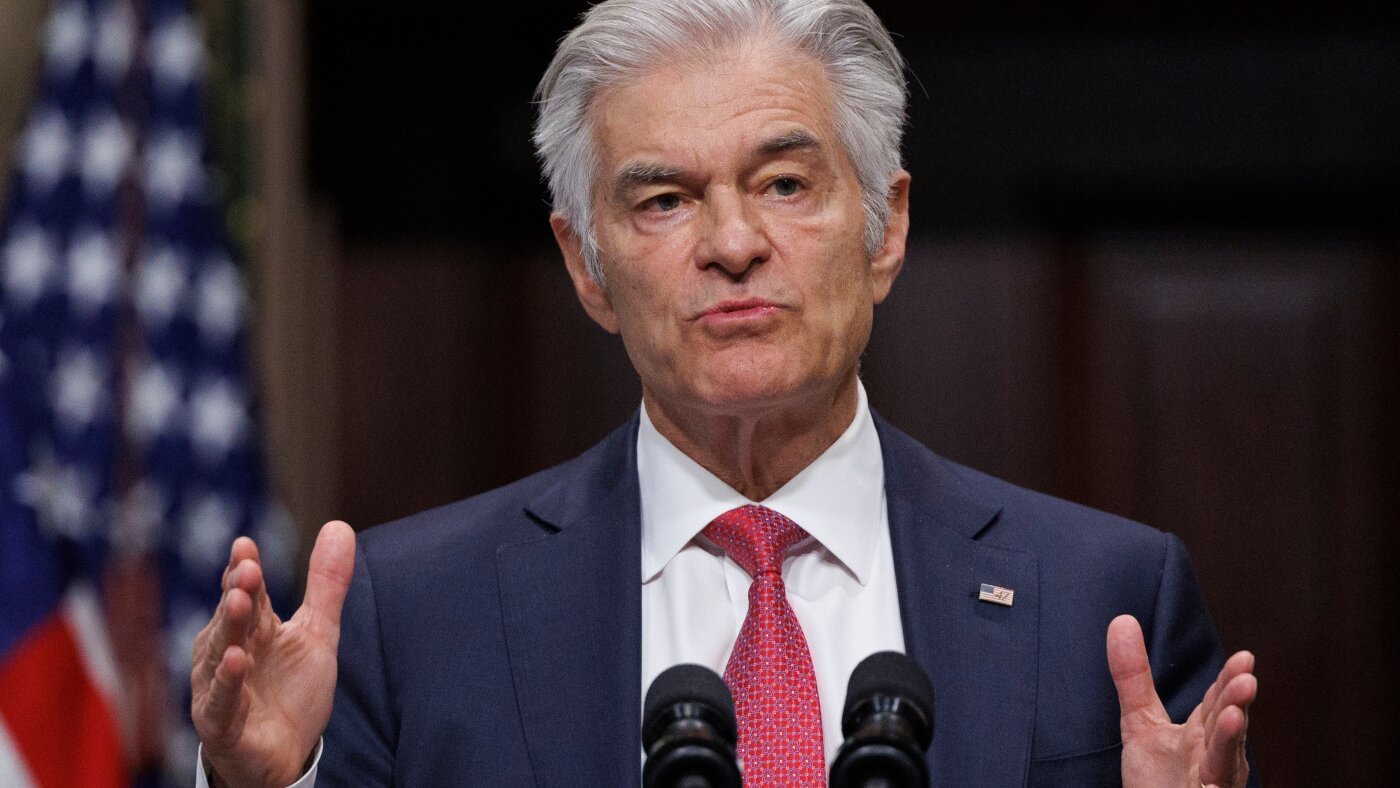
President Trump speaks during an event on health care affordability in the Oval Office at the White House on Thursday in Washington. Mark Schiefelbein/AP hide caption
toggle caption
Mark Schiefelbein/AP
WASHINGTON — An appeals court on Friday blocked President Trump's executive order suspending asylum access at the southern border of the U.S., a key pillar of the Republican president's plan to crack down on migration.
A three-judge panel from the U.S. Court of Appeals for the District of Columbia Circuit found that immigration laws give people the right to apply for asylum at the border, and the president can't circumvent that.

The court opinion stems from action taken by Trump on Inauguration Day 2025, when he declared that the situation at the southern border constituted an invasion of America and that he was "suspending the physical entry" of migrants and their ability to seek asylum until he decides it is over.
The panel concluded that the Immigration and Nationality Act doesn't authorize the president to remove the plaintiffs under "procedures of his own making," allow him to suspend plaintiffs' right to apply for asylum or curtail procedures for adjudicating their anti-torture claims.

"The power by proclamation to temporarily suspend the entry of specified foreign individuals into the United States does not contain implicit authority to override the INA's mandatory process to summarily remove foreign individuals," wrote Judge J. Michelle Childs, who was nominated to the bench by Democratic President Joe Biden.
"We conclude that the INA's text, structure, and history make clear that in supplying power to suspend entry by Presidential proclamation, Congress did not intend to grant the Executive the expansive removal authority it asserts," the opinion said.
White House says asylum ban was within Trump's powers
The administration can ask the full appeals court to reconsider the ruling or go to the Supreme Court.
The order doesn't formally take effect until after the court considers any request to reconsider.
White House press secretary Karoline Leavitt, speaking on Fox News, said she had not seen the ruling but called it "unsurprising," blaming politically-motivated judges.
"They are not acting as true litigators of the law. They are looking at these cases from a political lens," she said.
Leavitt said Trump was taking actions that are "completely within his powers as commander in chief."
White House spokeswoman Abigail Jackson said the Department of Justice would seek further review of the decision. "We are sure we will be vindicated," she wrote in an emailed statement.
The Department of Homeland Security said it strongly disagreed with the ruling.
"President Trump's top priority remains the screening and vetting of all aliens seeking to come, live, or work in the United States," DHS said in a statement.
Advocates welcome the ruling
Aaron Reichlin-Melnick, senior fellow at the American Immigration Council, said that previous legal action had already paused the asylum ban, and the ruling won't change much on the ground.

The ruling, however, represents another legal defeat for a centerpiece policy of the president.
"This confirms that President Trump cannot on his own bar people from seeking asylum, that it is Congress that has mandated that asylum seekers have a right to apply for asylum and the President cannot simply invoke his authority to sustain," said Reichlin-Melnick.
Advocates say the right to request asylum is enshrined in the country's immigration law and say denying migrants that right puts people fleeing war or persecution in grave danger.
Lee Gelernt, attorney with the American Civil Liberties Union, who argued the case, said in a statement that the appellate ruling is "essential for those fleeing danger who have been denied even a hearing to present asylum claims under the Trump administration's unlawful and inhumane executive order."
Las Americas Immigrant Advocacy Center, one of the plaintiffs in the lawsuit, welcomed the court decision as a victory for their clients.
"Today's DC Circuit ruling affirms that capricious actions by the President cannot supplant the rule of law in the United States," said Nicolas Palazzo, director of advocacy and legal Services at Las Americas.
Judge Justin Walker, a Trump nominee, wrote a partial dissent. He said the law gives immigrants protections against removal to countries where they would be persecuted, but the administration can issue broad denials of asylum applications.
Walker, however, agreed with the majority that the president cannot deport migrants to countries where they will be persecuted or strip them of mandatory procedures that protect against their removal.
Judge Cornelia Pillard, who was nominated by Democratic President Obama, also heard the case.
In the executive order, Trump argued that the Immigration and Nationality Act gives presidents the authority to suspend entry of any group that they find "detrimental to the interests of the United States."
The executive order also suspended the ability of migrants to ask for asylum.
Trump's order was another blow to asylum access in the U.S., which was severely curtailed under the Biden administration, although under Biden some pathways for protections for a limited number of asylum seekers at the southern border continued.
Migrant advocate in Mexico expresses cautious hope
For Josue Martinez, a psychologist who works at a small migrant shelter in southern Mexico, the ruling marked a potential "light at the end of the tunnel" for many migrants who once hoped to seek asylum in the U.S. but ended up stuck in vulnerable conditions in Mexico.
"I hope there's something more concrete, because we've heard this kind of news before: A district judge files an appeal, there's a temporary hold, but it's only temporary and then it's over," he said.
Meanwhile, migrants from Haiti, Cuba, Venezuela and other countries have struggled to make ends meet as they try to seek refuge in Mexico's asylum system that's all but collapsed under the weight of new strains and slashed international funds.
This week hundreds of migrants, mostly stranded migrants from Haiti, left the southern Mexican city of Tapachula on foot to seek better living conditions elsewhere in Mexico.